Friday, January 17, 2020

Hiking Tourism Effects on Environment

Melissa Laurie
January 17, 2020
IDS-102
Hiking Tourism Effects On The Environment

Two areas of pop-culture I'm very interested in are Hiking and Travel. I found This article on how hiking tourism is affecting our environment. As an environmental science major this topic very much stands out to me. Many people love hiking, travel, and all things "outdoorsy", but fail to realize the impacts it is having on our environment. Another simple example is zoos. You love animals, you want to see the animals, you go to the zoo. Perfect, right? Until you realize many times zoos are unhealthy and unnatural for many animals. Of course, this is not always the case but it is hard to differentiate what zoos are "good" or "bad", just as it is hard to be an environmentally friendly tourist.

This article touches on the facts of rings on trees. Every year a tree is alive it forms another ring around it. In previous years as an environmental student I've learned the thickness of these rings depends on how healthy the soil/environment around the tree is. In this article they discover through testing several different areas of trees that the densely populated hiking trails are becoming more and more compacted and the soil and trees are suffering from it.

This is a problem that may be inevitable, but little steps can be taken to help. Of course going on a hike in a beautiful new place is amazing and a fantastic way to witness the world around you, wether it be in your hometown or on a getaway. Nobody expects the people of the world to just stop going on hikes, if anything we are always encouraged to be out in nature experiencing the natural world. One thing that could be done to help this would be to step off the beaten path once in a while. Try out the places that aren't so populated, who knows, you can find some real, true diamonds in the rough that way. 

source: http://web.b.ebscohost.com.ezproxynsc.helmlib.org/ehost/detail/detail?vid=3&sid=263fa912-6891-4ca2-9f8a-043b781676dd%40sessionmgr102&bdata=JkF1dGhUeXBlPWNvb2tpZSxpcCZzaXRlPWVob3N0LWxpdmUmc2NvcGU9c2l0ZQ%3d%3d#AN=98604082&db=a9h

First Blog Houston Astros Cheating scandal

The main news in sports right now is the scandal going in baseball in Houston as well as in Boston, but mostly in Houston with the Astros and Red Sox. The Houston Astros have been punished for stealing signs during the 2017 season in which they won the World Series. The Astros used cameras in centerfield to figure out what pitch was getting thrown to the batter. In the dugout the players/ coaches would bang a trash barrel to indicate which pitch was coming using this to communicate to the batter. The batter would listen to figure whether it was a fastball or off speed pitch and sit back on an off speed or swing right away for a fastball. The Houston Astros have been found guilty already and the manager, general manager, the bench coach of the 2017 team (which was the Boston Red Sox manager the past two years) have all received suspensions for more than a year. As well as three have been fired from there jobs because of the incident. This has been the biggest scandal of cheating in baseball since the steroid era. The Houston Astros organization has been punished by losing a first and second round pick in the next two years of the MLB draft, as well as being fined 5 million dollars which is the most a team can be fined in the MLB collective bargaining agreement. The organization has tried to get separate itself from anyone connected to the scandal,  but now the players are being accused of being apart of the scandal by wearing beepers underneath their jersey. Although they have been proven innocent because there has not been enough evidence, social media and major news outlets have been dragging the players involved names through the mud.


https://bleacherreport.com/articles/2871928-report-viral-twitter-videos-accelerated-mlbs-investigation-in-astros-scandal

https://twitter.com/Jomboy_/status/1194348775965437952

Wednesday, January 15, 2020

Social Media and a Sense of Belonging

Citation:
van Eldik, Anne K., et al. "Urban & Online: Social Media Use among Adolescents and Sense of Belonging to a Super-Diverse City." Media and Communication, vol. 7, no. 2, 2019, p. 242+. Gale OneFile: Pop Culture Studies, https://link.gale.com/apps/doc/A596061954/PPOP?u=mlin_n_danvers&sid=PPOP&xid=95f03b6a. Accessed 15 Jan. 2020.

Finding this article was time-consuming. I read several others before I realized they wouldn't work for this assignment. I chose this one because it focused on how social media can affect identity, it was a study with data and charts, and it completely appealed to the nerd in me. I found it by searching the keywords "social media" in the Pop Culture Studies database. I narrowed the search down to articles and peer-reviewed only. I couldn't find a way to search by length but a quick Google search told me the average word count for a page was 500, so an article over 6000 words should fit the 12-page minimum. The databases were easy to navigate. The site is very user-friendly. The hardest part was going through the articles and selecting one.

This article is about a study conducted regarding the use of social media and the level of self-esteem and geographical identity on migrant and non-migrant adolescents. The researchers surveyed a group of 324 students aged 9 to 13, equally male and female and nearly half migrants, in a school setting. The purpose of the survey was to determine if social media engagement influenced the development of self-esteem and a feeling of belonging in the diverse city of Rotterdam in the Netherlands. The study looked at several contributing factors: access to cellular or computer technology, demographics, social media use, and the students' own feelings of self-esteem and identity. The researchers stated several questions and hypotheses before analyzing the data. They found social media did have a positive effect on urban identity, but the results on self-esteem were both positive and negative.

I found this article to be interesting. It was not about what I initially thought it would be by the title. It's important to know how using social media is affecting the next generation. While this study had its limitations, it did reach a group of people that are hard to get data on: migrants. It was insightful to read all the hypotheses and questions that the researchers were hoping to answer. The data followed what they had initially thought for the most part. It was interesting that the migrant children showed a stronger urban identity than the ones native to the city, though the reasoning is sound. Kids want to belong and though they may not feel like they are part of the nation, they feel closer to the city they reside in and connect with it in a positive way on social media. This paper makes me want to dive deeper to see what other ways social media is influencing the identity of the next generation.

Link to article: Urban & Online: Social Media Use among Adolescents and Sense of Belonging to a Super-Diverse City

Sunday, April 7, 2019

Andy Comic Books #20


            The comic I chose to read and analyze for this week’s blog post came from Ace Comics, a comic book series, published by David McKay Publications between 1937 and 1949 – right before the golden age of Comic Books began. Andy Comics number 20, the specific comic I decide to read this week tells the story of Andy and his friends in town coming together and fighting back after the girls in the town decided to change their outfits. The “New Look” that the girls in town are wearing is very similar to the one that the guys in the town traditionally wear. This new look wasn’t something that the guys in the town were ready to accept. The guys in town come together to meet and find a way to get the girls in town to switch back to their old look. In the end, the guys come together and “wipe the ‘new look’ out of existence” simply by using reverse psychology. 


After reading and analyzing this comic, it quickly becomes clear that the entire plot line is filled with sexist undertones. This immediately made me think of the essential question that was asked in module six, how are our perceptions of gender, sex and sexuality shaped by popular culture. The comic, which was published in 1948 relies heavily on simply judging the girls in the town on the way that they look. Additionally, the comic looks to the boys in town to determine not only what the girls can wear, but also how they can react. When the girls decided to counter protest the boys, they were chastised by the boys. While a lot has changed since the publication of this comic, some of the same misogynistic stories are still being told today.   


Comic Book Link: https://ia800203.us.archive.org/24/items/AndyComics20June1948/Andy_Comics_020_text.pdf

Saturday, April 6, 2019

Oogli Yawabooby Razzle Dazzle Root Beer: Racism in Howdy Doody


In the 1950 Howdy Doody comic No.6, one of the stories titled "Adventurers Club" from Dell Comics show friends Howdy Doody and Dilly Dally overhear an offer being made to whoever can produce the most unusual creature of the year, and decided to go on a voyage to the Golly-Wolly Islands to discover it. Unfortunately, the captain of the ship brings Howdy and Dilly to the wrong island, which is inhabited by cannibals.The issue (pun intended) with this comic is mostly the cultural priorities that are outlined in the Comic Code Authority of 1954 go into detail about what is unacceptable for the public to be reading, however, when addressing racism or things of the like, it is one vague blanket statement that reads “Ridicule or attack on any [...] racial group is never permissible.” But the content present in the Howdy Doody comic doesn’t necessarily identify a racial group, but creates one within the Howdy Doody universe which depicts islanders as more animalistic than human. Granted, the Comic Code Authority of 1954 was outlined four years after the publication of this Howdy Doody comic, but the real underlying issues are not fixed to the extent that other issues, like keeping the sanctity of marriage or prohibiting the use of the words “Horror,” “Crime,” and “Terror.”
The comic does not explicitly identify the ethnicity and/or race of the islanders of “Golly-Wolly Island” but seem to still perpetuate gross stereotypes of non-western island peoples. There are plenty of examples of this shown within the comic. First, we can see a form of black-face in how the islanders are stylistically drawn with overly wide and large lips. They seem to take up most of the islanders faces. This is similar to how black-face was used in Minstrel shows. The hair and costume of the islanders is primal, with the use of bones and various piercings as accessories. The islanders are also cannibals, as to add to the already animalistic characteristics they were given, they also seem to be not as smart as Howdy and Dilly, the main characters whose stupidity is the main focus of the comic series.
There is also a panel in which an islander, who we are meant to assume is some sort of shaman or spiritual figure within the population, wearing a ritual mask, chanting “Oogli Yawabooby… Razzle Dazzle Root Beer!” When asked what it was all about, a islander explains that he is asking the ancestors if they approve of Howdy and Dilly as a meal. This is an obvious play on non-western ritual practice, especially the importance on spiritual relationships with ancestors. From here, an actual gorilla appears, and, aside from the amount of body hair on the gorilla, there is very little difference in the way the islanders and the gorilla are depicted.
Popular culture has a role in perpetuating these stereotypes, especially in these comics. They seem light-hearted and for satire, but even comic books depicting dark-skinned, misshapen bodies in contrast with the white men and women depicted in
all of the comics create a harmful divide between “us” and “them.”


Wednesday, April 3, 2019

Postmodernism as Explained by a Drunk Man and Jordan Peele

The video was broken up into two parts: “Repeating History,” and “The Good, the Modern, and the Postmodern.” These two parts give us a quick history on the thought that led up to Modernism. The narrator is at a party talking to a woman who misuses the term “Postmodernism.” The rest of the video is meant to act as if the narrator spends the entire party, and even the morning after, explaining in layman's terms what Postmodernism is.
“Part 1: Repeating History” includes a background of Classicism in the Greco-Roman world, which would, in the 18th century, develop a counter ideology called Neoclassicism, which focused on empirical research- Science and logic were used to explain the world. The next counterculture in line was Romanticism, which challenged the Neoclassical thought that facts are more important than emotion. Romanticism would focus on the value of emotionality and personal experience. This would become a point of contention, and the two schools of thought were at odds with each other.
“Part 2: The Good, the Modern, and the Postmodern” Introduces Modernism, explaining that in the context of WWI and technology being made to kill people, creating the Lost Generation and also had brought out names such as Karl Marx, Friedrich Nietzsche, and Sigmund Freud. Social, Economic, and Political beliefs were questioned. Then, Postmodernism comes in as the “rebellious child” as an inverse to the structural thought of Modernism.
The narrator continues to provide differences among Modernism and Postmodernism, bringing back to the progression of technology. Modernist thought praised progress in that technology is the way that humanity improves, whereas Postmodern thought believe that progress may not necessarily be a good thing.One of the last comparisons made in the video was the difference in categorical preference between Modernists and Postmodernists. Modernists love genres, clear cut lines, and nicely fitting things into categories, whereas Postmodernists value what makes something different and unique.
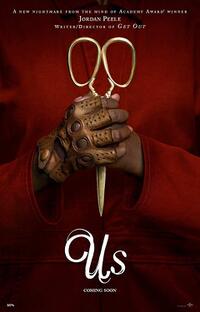
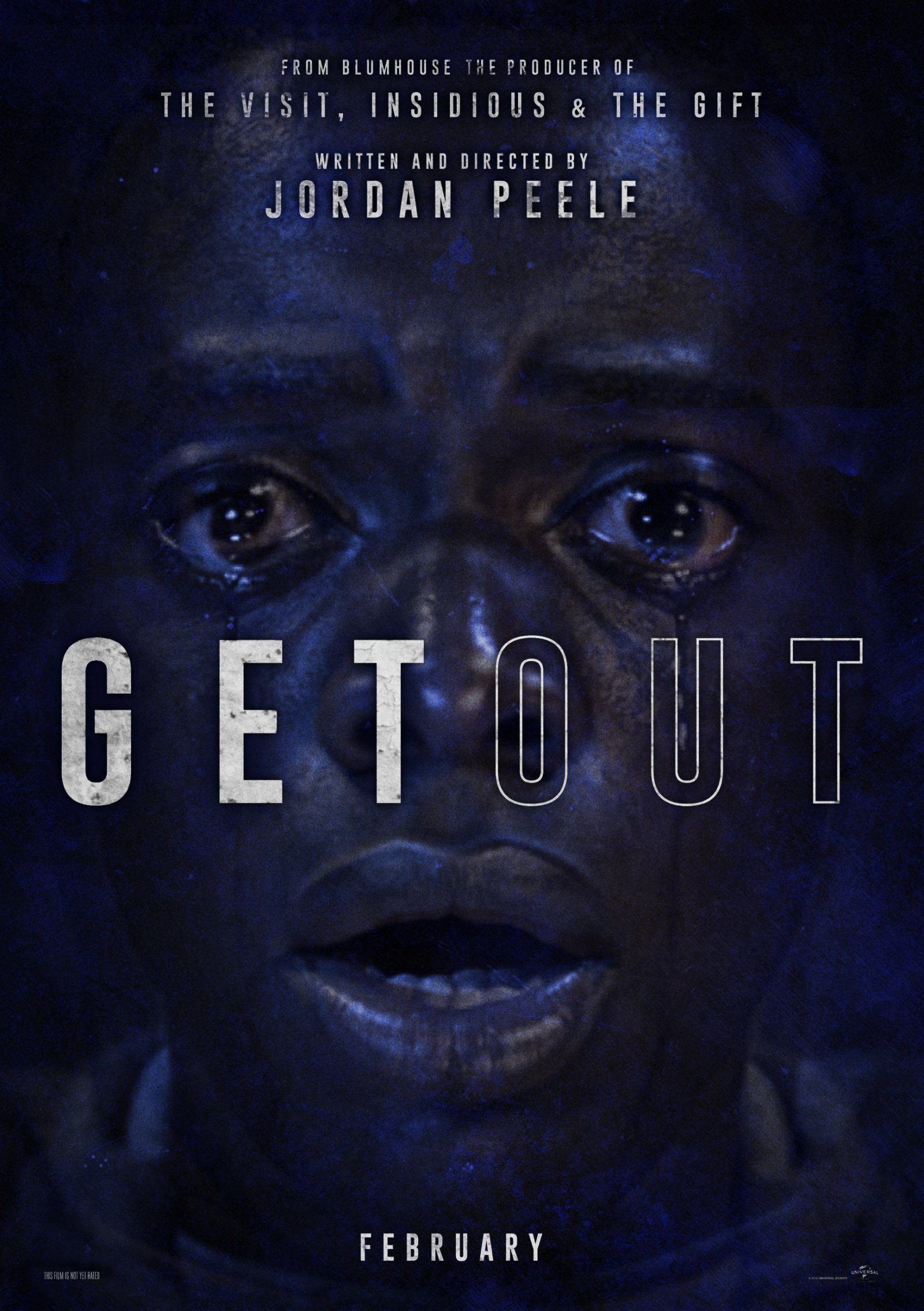
The idea within the video in which categorizing vs. celebrating uniqueness can be directly related to popular culture. Take, for instance, Jordan Peele’s horror/thriller films that have come out in recently. The creation of both Us (2019) and Get Out (2017) in itself is a great example of postmodernism in contrast with modernism. Jordan Peele is known for co starring in the comedy sketch series Key & Peele. His comedic reputation had not failed to be seen within his horror films. If Jordan Peele were to be creating movies and understanding himself as a filmmaker in Modernist thought, he would stick to purely comedy and stay within that genre. This is not the direction in which Peele had decided to go in, however. He, in following with postmodernist thought, genre-bent horror and comedy in Us (2019). Even Get Out (2017), a thriller with little humor involved steers away from the understanding of what kind of filmmaker Peele would be in comparison to his past.

Sunday, March 31, 2019

Postmodernism & The Office


 The Office and Postmodernism

For this week’s blog post, I decided to watch the video titled, The Office & Postmodernism. The Office is a fly-on-the-wall mockumentary parody about modern American office culture. The Office (US Version) airs in March of 2005 and instantly became a massive hit. The office looks at the lives of the works at Dunder Mifflin, a paper supply company located in Scranton Pennsylvania. The show is centered around Regional Manager, Michael Scott, played by the Emmy award winner, Steve Carell, is a single, middle-aged man who serves as an extremely boastful tour guide for the mockumentary. While at first glance, one might not notice the similarities between postmodernism, and the Office – it quickly becomes apparent after taking a closer look. For example, The Office utilizes three different styles of postmodernism, the style of filming, the use of intertextual references, and its presence on the internet. This is formally known as re-articulation, which is defined as the bringing of elements of traditional documentaries, such as single camera set up, and the feeling that a real story is being told. A Mockumentary, which is the style in which The Office utilizes, takes these ideas and elements and provides ironic humor. This is done by the practice of hyperawareness, which is frequently utilized throughout the show in different forms. The Office's use of intertextual references is one of the key elements of its postmodernism. The Office frequently makes references to different popular culture references from other TV shows and films, such as Battlestar Galactica, The Apprentice, and Lord of The Rings. These references are used to provide humor, as well as to push the story forward. These intertextual references are emblematic of the hyper-consciousness of postmodern popular culture, and as such creates an ironic knowingness in the audience as the views know what they’re referring to. Finally, The Office's presence on the internet through their website is a perfect example of postmodernism. In addition to the content created on the TV show, the creators developed a website that provides additional content for the audience. On their website, they have blogs supposedly written by the characters on the show, as well as games, videos and episode guides. It also offers online-only videos such as web-episodes and music videos that add an additional layer of content for the show. As a fan of The Office, I never realized the use of postmodernism throughout the film. While this concept is widely popular nowadays, the idea of watching an episode, then going online to experience even more content is a prime example of postmodernism. Overall, the office illustrates postmodernism with its use of intertextual popular culture references, mockumentary style, and their vast variety of Office related content available online. 


Sunday, March 24, 2019

Slashing Beauty Standards

I am going to discuss the concept of beauty standards and the effort made to break them, within this idea of cultural hegemony. Don't have any stomach rolls when you sit down. Make sure there is no cellulite in your thighs. Wait, are those stretch marks? Are you bikini season ready? These are some of the many things, due to the standard of beauty pushed by the mainstream media, that girls of all ages worry about daily, whether we like to admit it or not. How are we supposed to think any different when this idea of 'perfection' is plastered all over social media, magazine covers, television, and the like? 

We are all familiar with Victoria's Secret and the body types those models possess, but what message does it send to the 5'4, 140 pound, natural girl, when those are the only body types included in such a company? It sends a large message, one that led to supermodel and activist, Ashley Graham, speaking out on the topic at an NYC Launch party for a new Revlon cosmetic item. "For me beauty has always been beyond size. This is about using women who look different because we all look different and we need to praise that difference about us. That is what is beautiful, it’s that we’re all not created the same" (Kaitlyn Frey, People Magazine 2018). This came about after the 2018 Victoria's Secret Fashion Show, and here you can find her initial reaction, along with others, to the issue at hand. 

Ashley Graham is a perfect example of someone breaking the standard of beauty that has been so widely acknowledged. She is not 5'11, she is not 115 pounds, she is not a size 2;  she has curves, cellulite, stretch marks, and is absolutely stunning in every sense of the word. The body positive movement has been around for quite some time, but just recently it seems like the trend is on the rise. Not only are people being vocal about the topic, but the drop in sales at Victoria's Secret, is reflective of women no longer settling for just one body type being deemed 'perfect'. "Just a few weeks ago, VS announced they were shutting down 53 stores after sales dropped 7 percent in its last quarter. This steep decline was a direct result of the brand refusing to listen to customers to include more bra sizes and feature more diverse and inclusive models in their campaigns, reports CNN" (Faith Brar, Shape Magazine 2019). 7% is really just a drop in the bucket for Victoria's Secret, but the need to close down 53 locations may have been somewhat of an eye-opener that VS needed.

This conflict has created some, but not necessarily significant change. Just last week, Barbara Palvin, a 25 year-old Hungarian model, was given her 'wings' and named a Victoria's Secret Angel. Her body type is different from other VS models as she stands at 5'9, weighing 120 pounds, and is between a size 2 and 4. Here is where you can see the varying opinions on her becoming an angel. Some people saw this as the brand being more inclusive, and others, including myself, saw this as the brand completely missing the point.

The attempt made by Victoria's Secret to be more inclusive was minimal, but it was there. Small strides hopefully will lead to larger ones, and maybe one day we'll see some stretch marks and cellulite in a VS magazine or walking down a runway. 

If we don't, there is always the clothing/lingerie/lounge-wear company Aerie, who has made a conscious effort to acknowledge and recognize all body types, as they are; no airbrushing or photo shop. Just women in their natural, god-given beauty. Oh, and a purchase made there versus VS, won't require taking out a small loan.

Wednesday, March 6, 2019

“That’s Just Their Style:” A Look Into Recycled Pop Electronic Music Icons like The Chainsmokers and Zedd.

Do you remember The Chainsmokers’ 2015 song “Roses”? Maybe not, but you’ve definitely heard 2017 The Chainsmokers’ (featuring Coldplay) hit “Something Just Like This.” If you listen to them, they are the same song with different lyrics. The “drop,” is not changed at all. It is completely the same. The melodies are strikingly similar in The Chainsmokers’ “Honest” when compared to their more popular song featuring Pop Artist Halsey, “Closer” as well.

The same could be said for producer Zedd’s “Stay” and “The Middle.” Although it isn’t as blatantly recycled as The Chainsmokers’, the two songs follow the same recipe of distorted female voice, broken down with ticking noises. The same formula is used in the remixes as well. If you listen to Zedd’s remix to Shawn Mendes’ “Lost In Japan,” it is the same distortion and ticking sound. Sure, it could just be that it is Zedd’s “style,” or “sound,” but it seems to be only slightly varied from “The Middle.”


Each of the songs mentioned had their time in the spotlight, and although their popularity isn’t for lack of trying, as they both found a formula that appeals to the masses and decided to not fix something “if it’s not broken.” This, however, directly relates to Culture Industry. As described by Prof. Eaton, 2000s pop electronic music provides an abundance of itself, in only slightly varied versions of the same song, standardizing what it means to be a popular electronic song in the late 2010s. At the risk of sounding like a mass culture theory post- these songs almost distract the audience into thinking that producers such as The Chainsmokers and Zedd are creating groundbreaking sounds, whereas there are plenty of artists (even electronic artists) who do not get the popularity in which they deserve because they do not fit the mold of the top 40. It seems as if every time a “new” song by artists that are just regurgitations of their older songs takes away from the creativity of it all.
Jay-Z, rap sensation, said it perfectly in his 2009 song “On To The Next One:”
Hov' on that new sh*t, [n-word] like "How come?"
[n-word]s want my old sh*t, buy my old albums
[n-word]s stuck on stupid, I gotta keep it movin'[n-word]s make the same sh*t, me I make The Blueprint


An obvious nod to his albums named The Blueprint, Jay-Z makes the point in which artists should not be discouraged from moving forward with their music. Furthermore, there is an almost infinite amount of music out in the world, and staying within the cheap recycled music within the top 40s is just staying within the dictated popularity from whomever has the largest amount of money to market their sound.

Tuesday, February 26, 2019

Succubus Sexy and Entertaining; Incubus... Terrifying and Rapey

The Evil Demon Seductress is a trope described by the YouTube channel Feminist Frequency as “Supernatural creature (i.e. demon, robot, alien, vampire) disguised as a sexy human female.” Commentator Anita Sarkeesian continues to give a large list of examples within the film industry in which this trope can be found. Popular examples included characters such as Jennifer Check (played by Megan Fox) from Jennifer’s Body (2009) and Mystique (played by Rebecca Romijn) from X2 (2003). It sounds harmless in that the characters make for good entertainment, but Sarkeesian identifies the underlying misogynist stereotype behind it which is that women primarily use their sexuality to manipulate, trick, and control men. She continues to add that this may give women the impression that their only social power is their sexuality.
The trope can be seen all throughout popular culture, but the video focuses on the film industry. Returning to the examples provided, we can see Jennifer from Jennifer’s Body (2009) is a cheerleader (an already hypersexualized trope) possessed by a succubus. For those unaware of what a succubus is, they are in, in demon mythology, female demons which seduce and have sex with men. In the case of the 2009 horror flick, they are killed as well. The succubus lures men in with her sexuality to ultimately kill them. There’s a perfect scene where this is portrayed, in which Jennifer lures a football player into the woods, seduces him, but they stop due to all the creatures in the wood staring at them. Jennifer realizes she’s lost his attention, and unzips her shirt to reveal that she is wearing nothing underneath. Whilst he has her attention once more, and ends up turning into her succubus form and kills him. This same theme repeats with her other victims. The next example used was Mystique from the movie franchise based off the Marvel comic series X-Men. The movie specifically named was X2: X-Men United (2003).  There is a scene in the movie where Mystique seduces a security guard. She brings him over a couple of beers, which are drugged, and eventually she lures him into the bathroom, where he finishes his beer and he becomes unconscious, and from there she can complete the mission, injecting him with iron.
There are many more examples of The Evil Demon Seductress, for example the POV horror anthology V/H/S (2012) includes a segment in which a vampire-like female  demon devours two men. Sarkeesian notes that this trope is popular in that it gives into objectifying females. This is appealing to the male audiences. It is not, however, rare to see this role switched, in which a male would seduce a female and ultimately kill her, but rare for it to be a male supernatural being unless we’re speaking of examples like The Incubus (1982). Most of the time, the sexual circumstances are depicted as rape instead of something seemingly consensual (aside from being murdered, of course), found in horror such as Rosemary’s Baby (1968).  Honestly, other than Rosemary’s Baby (1968) male incubus-like horror is not as popular. Interesting to note that the popularity of the evil demon seductress trope is contingent on the women being the offender, otherwise it would be a disturbing supernatural rape scene instead of a sexy woman seducing a man. Neither are positive things.