Showing posts with label race. Show all posts

Wednesday, May 18, 2022

Soaring to new heights

 Race and ethnicity play a major part of our pop culture, especially in film or TV. A lot of the time, minorities in these shows or films play a stereotypical role based on their race which has led to stereotypes about people in our society. There are instances, especially more recently in the 21st century, of these types of stereotypes and racial roles being broken in TV and film. A great example of this would be Sam Wilson (Falcon) from Falcon and the Winter Soldier. The show does a great job of applying a possible real world scenario of how a Black superhero could be treated by society and also how Sam breaks through all of the subtle racism and stereotypes to become the next Captain America.

The show has numerous scenes in which depict how Sam, who has done everything right, is treated by society. Despite being an Avenger and saving the world several times, he is refused a bank loan to save his family business and it is heavily implied that the reason the bank will not approve the loan is because of his race. There is also another scene in which Bucky and Steve are arguing in the middle of an urban street about Sam giving up Captain America’s shield to the US Government, and two police officers pull up and are ready to arrest Sam until they realize who he is. They continually ask Bucky if he is alright and if he feels threatened, to which he shuts down. Then at the conclusion of the show, the US Government doesn’t want to give Sam the shield and the identity of Captain America because of the perception of Captain America being black. Despite all of that racism working against him, Sam defies it and takes ownership to the Captain America title becoming the face of American military might.

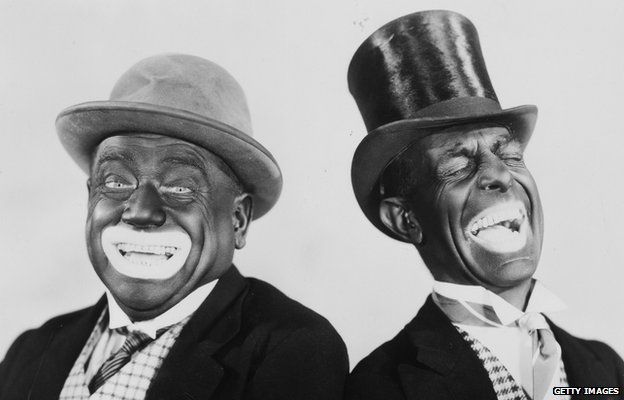
This character is portrayed to defy previous stereotypes about black Americans and black superheros. He breaks through that Uncle Tom type stereotype and instead pushes the boundary for what a black superhero can be by becoming Captain America (Black-face.com). He does this by being proactive and vocal on where his standing should be and how he deserves the title of Captain America and the shield as Steve chose him to be his predecessor. At first he gave into the wishes of the white generals by handing over the shield and feeling as though he is not worthy of taking on the mantle of Captain America. But throughout the show he finally realizes that becoming Captain America is his true calling and to not just settle for being who he is as Falcon but to be more.


Wednesday, February 19, 2020

I drink and I know things, overcoming what you are born into.


This was a tough one. I don't watch a lot of TV and couldn't think of a stereotype defying character from anything other than an animated film. Though he's not necessarily another race or ethnicity, Tyrion Lannister from Game of Thrones is "other." Though physically he id depicted differently in the show vs the book, the accomplishments remain the same. This is more astonishing if you are familiar with the books. Tyrion is a little person, a person with dwarfism. In the time of Game of Thrones, I imagine not many of his kind lived, and those that did, did not lead lives anyone would envy. Tyrion was fortunate to be born to a wealthy, powerful family. Still, little people at the time were thought to be stupid, inept, and were often the jesters and the butt of jokes. Tyrion was useless on the battlefield but he was not stupid. He spent much of his time drunk and in brothels, but also had a sharp mind. He read constantly and knew everything going on, as he was often ignored. He had a good heart and won the love of a beautiful woman and a place of power none would have thought possible.

This video is a compilation of his best moments. WARNING: These clips contain R rated content. 
A character to compare him to, or more contrast, is Loc Dog from Don't Be a Menace to South Central While Drinking Your Juice in the Hood. According to the stereotypes, he was exactly the perfect example of a young inner-city black man. If Tyrion had become who everyone thought he was, he would have been one of the jesters/players at Geoffrey's wedding. He would have become a bumbling idiot. Though at times, much to his advantage, many characters perceived him as such. Though I do believe his name alone at times won him favor, and saved his life, his own good deeds and effort also led to his successes.

Saturday, April 6, 2019

Oogli Yawabooby Razzle Dazzle Root Beer: Racism in Howdy Doody


In the 1950 Howdy Doody comic No.6, one of the stories titled "Adventurers Club" from Dell Comics show friends Howdy Doody and Dilly Dally overhear an offer being made to whoever can produce the most unusual creature of the year, and decided to go on a voyage to the Golly-Wolly Islands to discover it. Unfortunately, the captain of the ship brings Howdy and Dilly to the wrong island, which is inhabited by cannibals.The issue (pun intended) with this comic is mostly the cultural priorities that are outlined in the Comic Code Authority of 1954 go into detail about what is unacceptable for the public to be reading, however, when addressing racism or things of the like, it is one vague blanket statement that reads “Ridicule or attack on any [...] racial group is never permissible.” But the content present in the Howdy Doody comic doesn’t necessarily identify a racial group, but creates one within the Howdy Doody universe which depicts islanders as more animalistic than human. Granted, the Comic Code Authority of 1954 was outlined four years after the publication of this Howdy Doody comic, but the real underlying issues are not fixed to the extent that other issues, like keeping the sanctity of marriage or prohibiting the use of the words “Horror,” “Crime,” and “Terror.”
The comic does not explicitly identify the ethnicity and/or race of the islanders of “Golly-Wolly Island” but seem to still perpetuate gross stereotypes of non-western island peoples. There are plenty of examples of this shown within the comic. First, we can see a form of black-face in how the islanders are stylistically drawn with overly wide and large lips. They seem to take up most of the islanders faces. This is similar to how black-face was used in Minstrel shows. The hair and costume of the islanders is primal, with the use of bones and various piercings as accessories. The islanders are also cannibals, as to add to the already animalistic characteristics they were given, they also seem to be not as smart as Howdy and Dilly, the main characters whose stupidity is the main focus of the comic series.
There is also a panel in which an islander, who we are meant to assume is some sort of shaman or spiritual figure within the population, wearing a ritual mask, chanting “Oogli Yawabooby… Razzle Dazzle Root Beer!” When asked what it was all about, a islander explains that he is asking the ancestors if they approve of Howdy and Dilly as a meal. This is an obvious play on non-western ritual practice, especially the importance on spiritual relationships with ancestors. From here, an actual gorilla appears, and, aside from the amount of body hair on the gorilla, there is very little difference in the way the islanders and the gorilla are depicted.
Popular culture has a role in perpetuating these stereotypes, especially in these comics. They seem light-hearted and for satire, but even comic books depicting dark-skinned, misshapen bodies in contrast with the white men and women depicted in
all of the comics create a harmful divide between “us” and “them.”


Saturday, April 14, 2018

Ripley's Believe it or Not!


Ripley’s Believe it or Not! Issue No.1 September, 1953


The first story is about a vision a ship captain had that ended up saving two ships from being shipwrecked. Then there are ‘unbelievable’ facts and optical illusions. The second story is about a boy who won a chess game and requested mercy instead of monetary gain, who turned out to be Thomas Paine. Then there is a spread about the mystery and wonder of Africa and different tribes. The third and final story is about a ship during the war that got bombed by their own bomb. 

In the spread “Africa Explored”, Ripley’s Believe it or Not! was respectful, for the most part in 1953, of their portrayal of Africans. They didn’t use blackface, to depict them and provided amazing examples of their different cultures. As opposed to how African Americans were portrayed as goofy and lacking actual culture. The Africans were shown as individuals within a community rather a laughingstock or influenced by white people. However, throughout the comic, there were no other depictions of Africans or African Americans at all. This was reminiscent of the notion that black people were not necessarily a relatable people that were to be included, rather only through study, should they be acknowledged. Given that the comic was published in the middle of the Civil Rights Movement, the race relations between African Americans and whites was tried anyway. But the comic reinforced the association of African Americans being from these foreign places and not actually a part of American society.  


Sunday, March 25, 2018

Hegemony and Modeling

With the 20+ cycles of America’s Next Top Model promoting different and culturally inappropriate bodies through the scope of super modeling, the idea of cultural hegemony is prevalent within the culture of modeling. Today’s models are almost always white, thin, and generally under 30. The public’s call to change these statistics is barely acknowledged, with hopes for a better future In Fall 2016, less than 25% of all models attending Fashion Week were people of color. There were designers that didn’t even feature any models of color at all. Body diversity was even rarer at Fashion Week. Out of all of the shows in New York, Paris, Milan, and London, there were only six plus models in Fall 2016. Moreover, of the six plus sized models, not one was over a size 12. As far as age, only eleven models were maturely aged, meaning they were over 40 years old.
To battle these kinds of facts, Tyra Banks and America’s Next Top Model have had cycles where they opened casting to plus sized models and waived the age restriction (which was 27 years old) to be more diverse and open. The show has produced 9 non-white winners out of 22 cycles. None of which that are plus sized or over 40. But there was a white, plus sized winner and a single contestant that was 42, who placed 6th overall.
Taking all of that into consideration. The show’s success and diversity have had some type of impact on the fashion model industry. But only minimally. Many of the designers at Fashion Week that chose to be inclusive, did it minimally, which doesn’t necessarily do anything about the bigger picture of people of color, plus sized, and older being underrepresented in the fashion world. Since opening the castings in cycle 3, there have only been 6 plus size models on the show. So with insignificant attempts on a show that is supposed to promote diversity in the modeling world, the fashion world has responded with a slight nod, not really changing anything.

Jezra is a body-positive blogger and model with unbelievable curves and one hell of a smoldering stare. You can see her whole portfolio here.

http://www.thefashionspot.com/runway-news/685109-runway-diversity-report-fall-2016/

https://www.nytimes.com/2015/12/06/fashion/americas-next-top-model-deconstructed.html
Photo: https://www.buzzfeed.com/norawhelan/theres-more-than-one-plus-size-model?utm_term=.qb6VzgyA79#.eflr1z3GDW

Friday, March 16, 2018

Module 5: Eminem

        Eminem is an individual who has been breaking racial stereotypes his entire career. For almost two decades now, he has created such a difference in rap culture. Rap culture being predominantly black, it was unheard of to have such a successful white rapper in the rap game. At the start of his career, Eminem was an underground rapper who was ridiculed by black people and called "rabbit". Black people called him "rabbit" because he was white and all primary public bunny figures were white rabbits such as the Easter Bunny and Peter Cotton Tail. Another stereotype this comment "rabbit" contributes to is that Eminem could be considered a white feminine man because it is a stereotype that white men in the rap game are more feminine.
   
      He has mentioned numerous times in his songs the struggle of being or becoming a rapper as a white man in the industry. For example, in his song "Without Me" he states, 
Though I'm not the first king of controversy
I am the worst thing since Elvis Presley
To do black music so selfishly

And use it to get myself wealthy
Hey, there's a concept that works
Twenty million other white rappers emerge
But no matter how many fish in the sea
It will be so empty without me
These lyrics show how others used to or might still see him as using black music to make money. Similarly, as referenced in the lyrics, Elvis Presley's hit song "Hound Dog" was originally sung by a black woman. Both Elvis and Eminem used black music to further their career. Eminem despite the criticism he received, continued to write and perform music, and above all break the stereotype that only black people are able to be successful rap performers. No matter the criticism he received/receives, he's always been very favorable in his craft and is a bestselling artist. 

Sunday, February 18, 2018

Module 5 - Olivia Pope

When presented with the challenge to think of a character who breaks racial stereotypes, the choice was fairly simple for me. I instantly thought of Olivia Pope from the TV show Scandal. Olivia is the epitome of a character who breaks down these stereotypical walls, in my opinion. Pope runs her own crisis-management firm in Washington D.C. She works with fixing political scandals, hence the name of the program. 

What makes Olivia Pope so special is that she is a black woman in power. She runs her own company and is in charge of fixing the problems of mainly white male politicians. This clip from Season 4 shows complete power to me. As a black woman, she is a minority, but in this clip she is telling off a white male who also happens to be the vice president. 

Pope is such a significant character, especially for black women. In the media, black women are portrayed as unintelligent, uncivilized, and angry. Pope is viewed as strong, smart, and intelligent. I think it is especially important for young girls to see how powerful they can be and that there is no superior color or gender.


Video Source:
“Scandal - Season 4 Episode 9.” ABC.
(https://www.youtube.com/watch?v=6Jq4xU90Q8w)

Aunt Viv: Smashing Racial Stereotypes


           This week, we looked at different representations and misrepresentations of race and ethnicity in American popular culture. Culturally and historically, there are hundreds of years worth of scientific and cultural dehumanization of African Americans. Often the butt of jokes, African American people have served as high entertainment. This all makes the popular television series The Fresh Prince of Bel-Air no different. However, instead of offering an outlet to laugh at the expense of African Americans, the show allowed audiences to laugh with African Americans and see them in a more flattering light. The family of Judge Philip Banks is flipped, turned upside down when his wife’s nephew, Will, comes to live with them after being in an altercation in his hometown of West Philadelphia. Phil’s wife, known as Aunt Viv, is caring, yet no nonsense, and loving, yet firm. Her presence on the show is tremendous. The audience is led to believe that she is just a housewife that reaps the benefits of her husband’s work, but thats not true. It is revealed in episode 21 of season 1, that she had struggles herself. Coming from a family that relied on her to succeed and do well, she dropped out of high school and had to work days to go to school at night. Then, she was able to earn her PhD, become a teacher, and carry out the success her family expected of her. After seeing how hard she worked to achieve all that she has, she becomes a role-model for everyone. Her depth and revelation showed that everyone is deserving of a second chance, and that being at the bottom doesn’t mean that you’ll never make it to the top. 


          Aunt Viv’s struggle in her life can be paralleled to that of African American’s life in America. Showing that despite what is given you, you can rise above and make things better for yourself, if you want it to be. Her representation in the show is the opposite of the stereotypes put out. She was educated, a hard worker, and influential. All things that would be unseen had this episode not been aired. She shows the importance of not judging a book by its cover, because she is more complex than what is initially portrayed. 


TheAntiIntellect. "Jasmine Guy Guests on Fresh Prince In One of The Most Powerful Episodes Ever." YouTube. YouTube, 30 Mar. 2014. Web. 

Friday, February 16, 2018

Module 5, Race and Ethnicity

Luke Cage is an African American superhero, also referred to as “The only Black superhero”. Cage is a bulletproof superhero, protecting the streets of Harlem from serious trouble. His bulletproof skin is not his only asset, though, Cage refers to so much wisdom of his understanding of black history and achievements. Throughout the series, Cage does his best to protect both citizens as well as the city of Harlem from bad guys, who reside on both sides of the law. Luke Cage shows the side of the black and Latino community that many people don’t commonly see today in society, as most of the time only negative stories are shared, somewhat corrupting peoples views on other cultures. Similar to what we learned in this weeks module, if you’re taught, or your mind is shaped to believe that a certain culture acts the same, rather than an individual, that’s what you will expect out of that culture. Sure, Cage has unmatchable strength, and can absorb bullets with his skin, but Luke Cage’s biggest asset is devotion to cultural and ethnic history, and his pride to share the knowledge of what Harlem once was, and why it should be a safer place. 
Attached is a clip from Luke Cage where Cage provides his understanding of work ethic, setting the right example for the future, and his definition of what Harlem truly is.

Sunday, May 7, 2017

Secret Agent Woman

On this redemption blog post week I would like to take a shot at week 5's blog topic of characters who break ethnic stereotypes. I admit that this was tough for me to think of a character strong enough to use as an example, but I came back time and time again to the exhilirating lead actress of Quanitco: Priyanka Chopra as Alex Parrish.


I cannot wax peotic enough about just how majestic and enchanting this show really is. It begins with our main character Alex Parrish laying in the ruins of a destroyed Grand Central Station - with no recollection of how or why she is there. She is instantly picked up by a group of senior FBI agents who waste no time in pinning the blame on her. It is instantly apparent to her, and to the audience, that she is being framed. The rest of the season works its way backwards as she must recall every other agent and mentor she met and worked with in FBI boot camp to figure out who the real culprit is.

The background of the character, and the actress, is Indian. There is a heavy side-dish of tragic backstory to the character of Alex, though they do not try to change her real-life heritage. Alex's father was a top FBI agent who died suddenly during her childhood, a fact that is covered up by all parties. Alex is sent to live in India with extended family after this event, but soon returns and joins the FBI in hopes of finding out more about what he did while he was an agent.

Alex Parrish is an extremely strong, intelligent, and resilient character - a far cry from the stereotype of dumb and cheap or poor Indians owning convenience stores or the like. Though her heritage has very little to do with why the character is so enjoyable to watch, it could be said that if the character of Alex was any other race, the show might not have the same tone. There's a note of exotic wonder to Alex, because even the white characters in the show are painted as a bit boring and typical. (Caleb, who's parents are both agents and very powerful and rich, and also Shelby who comes from a rich southern family and enjoys plenty of privilege.)


Quanitco's varied cast of characters also includes many other races and backgrounds, including the character of Nimah Anwar, a woman of Arab descent who values her privacy above all. Though she on the surface appears to be a conservative muslim, more secrets are revealed about her as the show progresses. The character of Simon Asher fills both the Jewish and gay roles, though again, he is not all he appears to be. Finally, one of th emost notable presences in the show is that of Miranda Shaw, who also seeks to openly destroy the stereotype that blacks cannot have important jobs, etc. She is one of the few characters who remains static about her outlook and reason for being there, where the others may be hiding things or embellishing the truth at times.

I encourage anyone who has not seen Quantico to watch at least the first season, as I fear I cannot say much else without giving away much of the reveal. You will not be disappointed with the plot, I promise!

Monday, March 21, 2016

Module 9 Example: #OscarsSoWhite

PROMPT
This week's video tackled the concept of hegemony and it's totally ok if you're still having a bit of trouble with it.  Here is another video that summarizes the idea really well with a visual metaphor: Cultural Hegemony (2:24 minutes) along with this one: Hegemony: WTF? An Introduction to Gramsci and Cultural Hegemony (6:26 minutes).

With this in mind and the examples that I identified in this week's video on hegemony, your goal is to identify a hegemonic struggle, past or present between the mainstream culture (e.g. the white and pure milk within the video above) and a subculture or counterculture that has found some way to infiltrate but not necessarily changed. For this, it is probably useful to link to an article or blog post (note: this should be news-focused, not information focused), that discusses the issue.  I don't recommend searching merely for your topic AND hegemony--trust me, that won't really work. Instead, look for articles that talk about how a marginal group is trying to impact the dominant culture.  

Within your post, you should include the following:
  1. Identify the subculture or counter-culture that you're going to discuss. (1 paragraph)
  2. Identify how and why it comes into conflict with the mainstream culture. (1 paragraph)
  3. How this conflict has created some but not necessarily significant change and how we can understand the hegemonic forces at play within this scenario.  (1 paragraph)

Be sure to be specific with your example and to use the language and ideas from the video.

Relevant Labels/Tags:  Hegemony, dominant group, subordinate group, [specific arena/topic that you are exploring]


EXAMPLE


I'm going to talk about the #OscarsSoWhite debate that heated up in the announcements of the Oscar nominations for 2016 within this idea of cultural hegemony.  For those unfamiliar with what it was about, here is a basic primer.  Now, since their inception, the Oscars have been almost overwhelmingly white.  On this site, you can see the breakdown of nominations and actual wins, which shows winning is a pretty rare concurrence. Like many areas of popular culture, a white dominant culture has largely controlled the decisions (what movies get made), and prestige (who gets recognition).  This year, after the second year in a row of no African American nominations in the major acting areas, despite there being strong contestants, struck a nerve among the African-American community and other allies.  


The tension gained enough attention to warrant news reports in major publications and news stations of people boycotting the Oscars.  It became clear that the interest in and purity of the Oscars as the leader in the film cultural tastes was being challenged.  So they did react in two particular ways.  The first is that they made commitments to change their selection process, making there was much better representation of diverse identities among the Academy voters (currently, it is 94% white & 77% male).  The second is that they allowed Chris Rock to perform some rather controversial remarks as part of his role as host to the Academy Awards.


Now, many would look at both of these and believe that this was legitimate progress and celebrate it.  After all, the judges are more likely to be more diverse in the future and Chris Rock did at times throw some hard punches at the Academy Awards with regards to the history of racism and even false-categories of films.  Both seem to challenge the status quo, but do they?  In the case of making the pool more diverse, this is often the reaction that dominant institutions take when charged with not being inclusive of minorities.  And while this inclusion is good, it's a hegemonic practice to lessen the threat but not to do anything about it.  


Supreme Course Justice, Ruth Bader Ginsburg has said the following about women on the Supreme Court:  “So now the perception is, yes, women are here to stay. And when I’m sometimes asked when will there be enough [women on the Supreme Court]? And I say when there are nine, people are shocked. But there’d been nine men, and nobody’s ever raised a question about that."  This is an example of actual change.  By including a few women instead of radically changing the institution, the institution knows that the dominant values will still stay in place and to a certain degree, the injustice will continue, but there is less concern about it since there are representatives involved.  So we have superficial but not necessarily substantive change.  It's an interesting question for the Academy Awards--if they entirely reversed the racial and gender make up (6% white, 23% male) of the voters, would there be significantly different films being selected?  And if so, what does that say about those who are currently voting and why they are voting?


Even with Chris Rock's appearance, he may be critical of the concept, but by still performing and still making people laugh, he alleviates the issue rather than raises it.  He makes people feel slightly uncomfortable with his remarks, but in the next moment is onto the next joke.  Again, he superficially challenges them, but things stay largely the same.  


This is cultural hegemony at work.  The conflicted group (in this case, African Americans and allies), raise up resistance but by this time next year, given the superficial inclusive changes, they are likely to not be as resistant.

Sunday, February 21, 2016

Master of Representation

Aziz Ansari's Netflix original series, Master of None, premiered in 2015 to rave reviews from critics and general audiences alike. In the show, Ansari plays a 30-year-old actor named Dev who is struggling to find satisfaction amid post-modern ennui in New York City. Episodes touch on a variety of subjects, from Plan B, to street harassment, to the lack of ethnic diversity in television casting.


 A particularly striking episode comes in the form of Parents, wherein Dev and his friend Brian take their first-generation immigrant parents out to dinner in an effort to bond with them. They use this opportunity to ask their parents about their unique experience as immigrants, like what life was like when they first came to New York. Their mothers bond over an early fear of answering the telephone because of their heavily accented English. This is interesting because it acknowledges the differences in each individual's immigration experience while also highlighting similarities that people from totally different cultural backgrounds may encounter. Both Dev and Brian find it difficult to make time for their parents because of their busy lives, and because of the deep generational divide between parent and offspring. Dev's parents are from India, and Brian's parents are from China, so they all come from cultures much more conservative than modern-day America, providing different sets of frustrations for the parents and the children. This dynamic is especially authentic and effective because Ansari's real-life Indian immigrant parents play his parents in the episode.

Dev is an important, complex character who juggles his own identity as a modern American with his familial roots. Most notably, Dev is not constricted by any Indian stereotypes seen in commercials, film, and television (taxi driver, IT tech, etc.) Brian and his parents show that, contrary to the 1942 Superman clip that depicts little to no difference in its Japanese characters, Eastern Asian people have identities unique to their ethnic background and personalities. Master Of None is a wonderful show that tells the rich stories of people so often overlooked by television.

The African American Cowboy

A famous aspect of American culture is the myths of the taming of our wild west. Another famous although less fortunate aspect of our culture would be our spoiled past with the slave trade. When combined these two faucets of American culture make for quite the breaking of stereotypes. DJango: Unchained, a film by Quentin Tarantino is a breaker of such stereotypes.

In the mythological American West most cowboys were white men, sometimes you would have an occasional Mexican or Native American, but the majority of the heroes of the wile west had pale skin.

Django turned that all around. As a former slave he becomes a bounty hunter, hunting down white men for the bounties placed on their heads. Instead of him being the one running from the white man, he is the one chasing them down. An ironic scene in the movie is when Django is hunting down a group of brothers who are hiding out on a plantation. Well Django takes the opertunity to show one of the brother just how much the leather whip hurts. He turns the tables on slavery and takes charge.

Django is doubly surprising because he is an African American cowboy. The towns people are all shocked and confused when they see him riding about on top of a horse. At the plantation they visited, the owner even mentioned that it was illegal for a black man to ride a horse. Django didn't care, he was a cowboy and he had earned his freedom. He had just as much a right to be a top a horse as any man.

Spike Lee, the director of Bamboozled, would probably appreciate the originality of Django. He would like how the character strikes back against his oppressors and how he does not get used. Django fights against his suppressors and a society that sees him as a lesser. Django does not give up although the odds are against him, he keeps moving on because he must accomplish his goal and free his wife from the same oppression he so luckily escaped. Django is the image of a strong black man far from the bumbling buffoonery of minstrelsy, Spike Lee would definitely approve with pride.

Saturday, February 20, 2016

Oliver Wendell Jones: Scientist, Hacker, Genius


A character that I think defies racial stereotypes is Oliver Wendell Jones, a character from the comic Bloom County by Berkley Breathed. It was very popular in the 80s but Breathed is now publishing new strips with the same characters. Oliver is an African American boy who is, within the comic, the genius character who is into chemistry and computers rather than what could be considered typical of a young black child. His parents, however, feel he needs to have a more “normal” hobby.  His father wants him to give up computers and play football while his mother would have loved it if he had emulated Michael Jackson. Oliver just ignores them.


Instead he spends his time inventing things, hacking into the New York Times computers or into the IRS computer system in order to get his parents a massive refund or working for the defense department on a missile defense system.


Oliver's character resembles Pierre Delacroix in Bamboozled. He was a Harvard educated TV executive who produced shows with black characters which did not conform to stereotypes. His boss, like Oliver’s parents wanting him to conform to racial expectations, wanted Pierre to produce a show which he felt was a more realistic representation of black culture. Also, both Pierre and Oliver spoke in a smart manner as oppose to stereotypical trendy lingo.

Monday, February 15, 2016

Module 5 Example: Race and Ethnicity Under Six Feet

Prompt
Given what we have covered this week in regards to race and ethnicity in popular culture, find a strong example within popular culture of a character that breaks racial or ethnic stereotypes.  In your post, you should
  • Identity the popular culture (if it is a show or film, include maybe a relevant clip from YouTube; if it is a comic, maybe show a panel or two).
  • Explain the character you are exploring and how the show presents the character as a complex character.
  • Compare the character's portrayal with the potrayal of a racial or ethnic minority in one of the readings/views of the course. 
For this assignments, students should steer clear of European ethnicities and races and focus more on non-Western ethnicities and races.  This is not to say there are not stereotypes of Western peoples, but that with regard to American popular culture these groups and peoples tend to have a richer and more diverse representation.  

Relevant Tags:  Race, ethnicity, [specific popular culture being explore]


Example:  Race and Ethnicity Under Six Feet

For me, one of the most fascinating depictions of African American has been Keith from the series, Six Feet Under.  The show is a bit older and some may not be familiar with it, but it is a fantastic show in general.  The show provides with the character, Keith, an African-American gay male who is romantically involved with and eventually married to one of the main family members that the show focuses on.  In many ways, the show presents Keith as multi-faceted and explores it in interesting ways.  We learn early that he is a police officer, who is not only out but also part of a community of out and open police officers.  He goes to church regularly and expresses emotions in varying degrees about his life and his relationship with David.  Though there are elements of his life that could be stereotypical (his sister is an addict), these plot devices serve to make Keith more human in how he deals with them.  He recognizes the problem and tries to find support for the sister while taking care of his niece.  He has anger issues but works to overcome them rather than give into them.  Historically, Keith could have been easily rendered as an Uncle Tom or Buck type character but the show makes him a much more dynamic and interesting character.


The show also explores Latino identity in the character, Federico.  Hereto, they play with audiences' perceptions of stereotypes around Federico's background, his language abilities, his sexuality and such.  Often, the show sets up one of the Fishers (the main family) to make the assumption about Federico and leave Federico to explain or show wherein their assumptions are wrong.  It provides many moments of enlightenment and understanding.  In both cases, the show doesn't always represent the subordinate group perfectly, but many times, they show these characters as real people with complex lives.