Showing posts with label examples. Show all posts

Monday, May 2, 2016

Module 15 Example: Open Option

PROMPT

This week's post is open subject.  That doesn't mean you can necessarily post on anything you want, but rather you should take a look at the different posts we have had throughout this semester and determine a previous prompt that you would like to have another go at and write a second entry on that subject.  

Be sure to:
  1. Identify which prompt you are tackling (e.g. "I'm going to tackle Module 3's blog prompt..."). 
  2. Follow the original prompt and hit all the points it is asking of you. 
  3. Try to be more critical and in-depth than you were with your first post.

Relevant Labels/Tags:  any themes, theories, or content that is contained in your post.

In case you forgot the prompts for previous weeks, here they are:

EXAMPLE

Since I'm asking for you to revisit a previous prompt, there is no necessity for an example.  However, if you want to see how I break down an image/symbol for meaning, you can visit my blog and check out my deconstruction of the Playboy Bunny icon.

Monday, April 11, 2016

Module 12 Example: Bring Out Your Dead!

PROMPT


For this week, you will be providing an analysis of the zombie film that you watched. The analysis should draw upon one or more of the mini-lecture videos from this course (not including the one that is actually on zombies) such as feminism, race & ethnicity studies, the Frankfurt School (also known as critical inquiry; also, don't forget Part 2 & Part 3), symbolism, post-modernism, and hegemony.

What you should include in this post:

  1. Clearly identify the the film.
  2. A description of content (1 paragraph)
  3. A brief discussion of a theoretical lens that you want to use  (1 paragraph).
  4. Applying the theoretical lens to the film to explain what newer meaning is derived by using the lens on the film  (1 paragraph). 
  5. Where possible, a direct reference to a specific time (meaning how many minutes into the film) or a brief video clip that helps to illustrate your point.
Relevant Labels/Tags: Zombies, [Name of movie you examine], [Name of theoretical lens that you use].

EXAMPLE


So I decided to do my critique of King of the Zombies.  The film follows the exploits of a pilot, Mr. Bill, and Jeff (his African American servant) when they crash land on a jungle island somewhere in the Caribbean.  They encounter a Dr. Miklos Sangre (Spanish for "blood"), who welcomes them into his home.  While initially the pilot and Bill are fine with things, Jeff learns about and encounters zombies or the "living dead" within the house while stationed with the other (black) servants.  The rest of the film is a mixture of discovery by the white protagonists of the existence of zombies and Dr. Sangre's goal of turning people into zombies in order to ultimately get information from a US admiral he has captured.  All is thwarted but there are some many fascinating things going on in this film. 

The films could be analyzed through a great many lens.  The one I will talk about in this post is through the lens of feminism.  To discuss women within the film, it is also necessary to recognize that race also plays into this discussion. The representation of women is as troubling as the depiction of African Americans and people of African descent.  In particular, the servants of Dr. Sangre (to whom they call Master) is particularly telling.  Within this film, the maids faithfully serve Sangre, even though at times, their men have been enslaved from beyond the tomb.  Samantha's former husband now walks about the place as a lifeless zombie and she seems entirely content with this.  (This scene occurs around 44:00 minutes).  Coupled with this are the ways in which women are entirely passive (the wife of Dr. Sangre) or disregarded or made to be pawns of the men and eventually ends up dead (Sangre's niece).  In total, the film plays to a male-aesthetic in its presentation of women--particularly younger women as visually appealing and meant to be looked at (a la Mulvey) and are props for the men's machinations.


Monday, April 4, 2016

Module 11 Example: Reading Comics

PROMPT

For this post, students should visit either the Digital Comic Museum or The Internet Archive Comics Collection and read a US-based comic (these archives have manga and other non-US comics; these are not acceptable contributions for this assignment).  After reading the comic, provide an analysis of the comic using one or more of the theoretical lenses that have been presented to you in the course lectures such as feminism, race & ethnicity studies, the Frankfurt School (also known as critical inquiry; also, don't forget Part 2 & Part 3), symbolism, post-modernism, and hegemony.

Your post should include the following:

  1. A clear identification of the comic book that you read that includes the title, issue number, and direct link.
  2. Describe the content (1 paragraph).
  3. A brief discussion of a theoretical lens that you want to use  (1 paragraph).
  4. Applying the theoretical lens to the comic to explain what newer meaning is derived by using the lens on the comic  (1 paragraph).
Relevant Labels/Tags:  comics, [the name of your comic], [the name of the theory you are using]

EXAMPLE


Cover to the comic book: Crime Must Pay the Penalty 10 - October 1949

For this module, I will be tackling Crime Must Pay The Penalty Issue #10 from October, 1949.  The comic contains 4 comic stories (Revenge of the Cop Haters, The Genius and the Perfect Crime, Sinister Cab Combine, Pledged to Homocide), and one text story (Lineup Masquerade).  Revenge of the Cop Haters and Pledged to Homicide both entail prisoners who get out of prison and continue to commit crimes in attempt to get the aforementioned revenge or just to cause chaos.  The Genius and the Perfect Crime and Sinister Cab Combine, both deal with people who are aspiring improve their social standing (one to become part of elite culture and the other to court a woman) and commit criminal acts to achieve them.    Given the history of comics and the interest in crime comics (and eventually, horror comics) that we talk about in this module, I think discussing hegemony is probably a good topic to consider.  In hegemony, we see that there is a disruption of culture or an intrusion and that society tries to use compromises of sorts to limit actual substantive change.  Many of the comics read are often by youth, who feel disempower and crave a life not confined by rules and order.  Crime stories provide this opportunity to explore the uninhibited life.  Readers get to enjoy vicariously, the adventures and violence by the criminals represented in these tales.  However, the compromise comes with the fact that the stories often ended in their demise.  Thus, the cultural hegemonic powers provided the exploration of power in the face of authority but only tangentially and always with a message that this path ends in destruction of the individual instead of the overarching authority. 

Monday, March 21, 2016

Module 9 Example: #OscarsSoWhite

PROMPT
This week's video tackled the concept of hegemony and it's totally ok if you're still having a bit of trouble with it.  Here is another video that summarizes the idea really well with a visual metaphor: Cultural Hegemony (2:24 minutes) along with this one: Hegemony: WTF? An Introduction to Gramsci and Cultural Hegemony (6:26 minutes).

With this in mind and the examples that I identified in this week's video on hegemony, your goal is to identify a hegemonic struggle, past or present between the mainstream culture (e.g. the white and pure milk within the video above) and a subculture or counterculture that has found some way to infiltrate but not necessarily changed. For this, it is probably useful to link to an article or blog post (note: this should be news-focused, not information focused), that discusses the issue.  I don't recommend searching merely for your topic AND hegemony--trust me, that won't really work. Instead, look for articles that talk about how a marginal group is trying to impact the dominant culture.  

Within your post, you should include the following:
  1. Identify the subculture or counter-culture that you're going to discuss. (1 paragraph)
  2. Identify how and why it comes into conflict with the mainstream culture. (1 paragraph)
  3. How this conflict has created some but not necessarily significant change and how we can understand the hegemonic forces at play within this scenario.  (1 paragraph)

Be sure to be specific with your example and to use the language and ideas from the video.

Relevant Labels/Tags:  Hegemony, dominant group, subordinate group, [specific arena/topic that you are exploring]


EXAMPLE


I'm going to talk about the #OscarsSoWhite debate that heated up in the announcements of the Oscar nominations for 2016 within this idea of cultural hegemony.  For those unfamiliar with what it was about, here is a basic primer.  Now, since their inception, the Oscars have been almost overwhelmingly white.  On this site, you can see the breakdown of nominations and actual wins, which shows winning is a pretty rare concurrence. Like many areas of popular culture, a white dominant culture has largely controlled the decisions (what movies get made), and prestige (who gets recognition).  This year, after the second year in a row of no African American nominations in the major acting areas, despite there being strong contestants, struck a nerve among the African-American community and other allies.  


The tension gained enough attention to warrant news reports in major publications and news stations of people boycotting the Oscars.  It became clear that the interest in and purity of the Oscars as the leader in the film cultural tastes was being challenged.  So they did react in two particular ways.  The first is that they made commitments to change their selection process, making there was much better representation of diverse identities among the Academy voters (currently, it is 94% white & 77% male).  The second is that they allowed Chris Rock to perform some rather controversial remarks as part of his role as host to the Academy Awards.


Now, many would look at both of these and believe that this was legitimate progress and celebrate it.  After all, the judges are more likely to be more diverse in the future and Chris Rock did at times throw some hard punches at the Academy Awards with regards to the history of racism and even false-categories of films.  Both seem to challenge the status quo, but do they?  In the case of making the pool more diverse, this is often the reaction that dominant institutions take when charged with not being inclusive of minorities.  And while this inclusion is good, it's a hegemonic practice to lessen the threat but not to do anything about it.  


Supreme Course Justice, Ruth Bader Ginsburg has said the following about women on the Supreme Court:  “So now the perception is, yes, women are here to stay. And when I’m sometimes asked when will there be enough [women on the Supreme Court]? And I say when there are nine, people are shocked. But there’d been nine men, and nobody’s ever raised a question about that."  This is an example of actual change.  By including a few women instead of radically changing the institution, the institution knows that the dominant values will still stay in place and to a certain degree, the injustice will continue, but there is less concern about it since there are representatives involved.  So we have superficial but not necessarily substantive change.  It's an interesting question for the Academy Awards--if they entirely reversed the racial and gender make up (6% white, 23% male) of the voters, would there be significantly different films being selected?  And if so, what does that say about those who are currently voting and why they are voting?


Even with Chris Rock's appearance, he may be critical of the concept, but by still performing and still making people laugh, he alleviates the issue rather than raises it.  He makes people feel slightly uncomfortable with his remarks, but in the next moment is onto the next joke.  Again, he superficially challenges them, but things stay largely the same.  


This is cultural hegemony at work.  The conflicted group (in this case, African Americans and allies), raise up resistance but by this time next year, given the superficial inclusive changes, they are likely to not be as resistant.

Monday, March 7, 2016

Module 8 Example: The Sign of the Fist(Bump)

Prompt 
After watching this week's video on semiology and signs, let's take a look at signs within popular culture.  You should identify and explore a particular sign from within popular culture.  Within your post, you should do the following:

  1. Identify (and include an image of) a particular symbol in popular culture.  This can be literal sign such as a logo of a company, a symbol or icon within a particular show or series (e.g. Superman's "S" or Batman's "bat" icon--though now that I've mentioned those two, you'll have to find another).  Be sure to explain where it is from (e.g. from a novel, movie, show, etc).
  2. Explain within the symbol, what is the following:
    1. Signification (the whole meaning)
    2. Signifier (form)  
    3. Signified (meaning/concept)
    4. Myth (the bigger ideas that the sign introduces)
  3. In doing this exercise, explain what you found interesting and new.
This will be a trickier post than previous and students should really make sure the spend sufficient time with the video to make sure they understand what it is asking. 

Relevant tags:  Semiology, signs, symbols


EXAMPLE


The New Yorker Cover of President Obama FistBumping Michelle Obama.  Source: https://upload.wikimedia.org/wikipedia/en/6/60/New_Yorker_magazine_Politics_of_Fear.png
Source
This week, I want to talk about fist-bumps.  This form of greeting has taken hold of our culture over the last ten years and it's in interesting form of greeting, much changed from the traditional handshake.  In fact, it became part of our cultural dialogue in 2008 when President Obama fist-bumped Michelle Obama and FOX News decided it was a "terrorist fist jab,"  which encouraged the New Yorker to post the accompanying image here. 

It's clear that more is going n than a simple gesture between two humans, no?  So for this post, I'm delving into the symbolism of the fist-pump. 

So let's start!  The signification here is that it is called a "fist bump".  We use that as shorthand for what we are talking about.  The signifier--that is, the form that it takes is the meeting of the fists--the "bump" as it were.  As for what is signified--the meaning behind it all--is that it is a friendly greeting among two people who know each other.

However, the myth of this symbol is more intriguing at least for me.  The fist-bump connotes something different.  While the history of the handshake is rooted in the tradition of revealing that you are unarmed and building trust by making one's self vulnerable by approaching and coming into contact with someone, the fistbump tells a different story.  It is a closed hand meeting another closed hand in an act of symbolic violence (literally, meeting fist with fist).  In this interaction, it indicates less trust and compassion and more distance between people.  One does not open their hand to meet another but closes it and strikes this other person.  Given that its history is tied to sports, it is also indicative of an often hyper-masculine arena where signs of weakness are frowned upon.  Therefore, to meet even teammates with open hands hints at weakness.  Given this origin and its growing prevalence of the last 40 years while women have increasing asserted their rights and equality, it makes me wonder if in some ways, the fist-bump is a further attempt at maintain dominance in an increasingly diverse culture. 

Monday, February 29, 2016

Module 7 Example: Fitness Trackers

Prompt
Find and discuss examples of the Culture Industry within popular culture. Remember to discuss how the example does most, if not all of the following things:

Provides an abundance of itself in slightly different forms (standardization)
  1. Continually produces new version of itself (Pseudo-individualization).
  2. Distracts us from real world change. 
  3. Socially cements people to their popular culture.
  4. Creates a self-perpetuating reinvestment in the popular culture.
In your post, you should do the following
  1. Introduce and describe the example that fits in with the Culture Industry concept. Describe what it is and how it exists. (1 paragraph)
  2. Identify the aspects of its that invoke the ideas of standardization and pseudo-individualization. (1 paragraph)
  3. Explain how this example’s forms of standardization and pseudo-individualization contributes to distracting us from authentically changing the world and reinforces our connection with popular culture. (1 paragraph)
Avoid the following (since they have already been mentioned within the videos:

  • Cereal
  • Apple iProducts
  • Apps
  • Video games
  • Cars
  • Smart phones
  • TVs
  • Mac vs. PC
  • Disposable razors
  • Coffee
Relevant Tags:  Frankfurt School, critical studies, culture industry, [your example]

Example:  Fitness Trackers
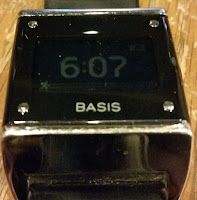

A photo of the Basis fitness tracker.
My own fitness tracker, The Basis
This week, I am talking about fitness trackers.  Many of us have seen or use these items.  They are part of what we call "wearable tech"--devices that we wear that often provide feedback about our physical states.  These products are usually somewhere between $100-200 and fit right into the culture industry.  In this case, they fit into the pop culture phenomenon known as fitness.  

Some may not think that fitness is popular culture, but if we think about it, we find it fits.  After all, fitness is considered a lifestyle choice and if modern life was properly designed to meet our needs, "fitness" wouldn't be needed because we would have it built into lives without a need of gyms, clubs, classes, etc.  Instead, many of us work in employment that gives us little to no consistent physical exercise or encourages directly or indirectly bad eating habits.  Therefore, in our "free time" for entertainment and relaxing, we must inject fitness into it.  Fitness itself is a culture industry certain with different types of gyms (pseudo-individualization: L.A. Fitness, Work-Out-World, Planet Fitness--all three almost right next to each other on Route 1 in Danvers/Peabody), distracting us often from real-world change (creating a life/work environment that perpetuates healthy lifestyle choices), and creates a self-perpetuating reinvestment in popular culture (gym memberships, the push to make work-out clothes fashionable, the insistence on the right gear). 

But for me, I find that wearable tech is my own example since it's been many years since I've gone to a gym.  I own a Basis, which is a fitness tracker.  Some of you may have a Fitbit, Jawbone, Garmin tracker, or some other example.  They all largely do similar things:  track steps, heartbeat, sleep, and other body activity.  And they all come out with new versions (pseudo-individualization--some, like Fitbit, are on their 5-6 generation and have only been around for 8 or so years).  In some ways, they distract us from real-world change in the sense that we can often use fitness trackers as a means of not having to think about or consider why our culture as a whole doesn't make the world more health/fitness focused.  For instance, we privilege the car over walking or biking.  Many towns and cities will have many miles of road with no sidewalks and certainly no bike-lanes, but endless miles of roads.  Instead of focusing our efforts on making places and spaces more walkable or healthy, we chose to spend time and money on devices to make sure we get in enough steps.  Fitness trackers also connect us further with popular culture in that they are often seen on the body and thus become points for discussion or finding others with similar devices.  Such conversations reinforce our investment (and later investment) in our devices.  


Of course, fitness trackers also have a built-in reinvestment in them for several reasons.  The first is that many of them keep all of our data that we generate.  If I've had a Fitbit for two years, then all of my data is accessible on the Fitbit website.  To move away from FitBit or give up the device means I lose access to new data or even the old data that I've generated.  The second way they self-perpetuate reinvestment is that like the iPod and iPhone, they are closed products and therefore, there is no way to replace the ever-dwindling rechargeable battery unless you replace it with another device and of course, by the time that happens, a newer and slightly more pricier version of your fitness tracker is available.  In this way, fitness trackers are a great representation of the Franklin School's critique of the culture industry.

Monday, February 22, 2016

Module 6 Example: The Straw Feminist


Prompt
For this week, I'd like you to watch another video from Feminist Frequency.  You can pick from any of the videos at the links listed below. I encourage you to look at a video that is related to something you like or may have some interest in.  

Video lists to choose from:
In watching the video, pay attention to the criticism and critique that the creator offers up and the reasons why she makes such an argument.  Provide the following in your post:
  1. The name of the video and a link to the video OR embed the video if you can figure out how to do it (Hint: it entails clicking on the icon in the edit bar that looks like a clapperboard).
  2. A summary explanation of what the video covers (1 detailed paragraph)
  3. A discussion about how it has influenced your thinking on the particular area she is discussing and if so, how it has impacted how you for other forms of related popular culture.  (1 paragraph)
  4. How does the criticism relate to some of the academic materials that we have explored in this course?   (1 paragraph)   
Please keep in mind when watching this video and other content of feminist theory, this particular line of thinking from Caroline Siede
Criticism doesn't necessarily make it "bad'--rather, it's a way of meaningfully engaging with a text for understanding the ways it impacts us.  Criticism doesn't necessarily denote a simply "good/bad" dynamic, but rather, helps us to understand the ways texts can be understood.
Relevant Tags: Feminism, gender, sex, sexuality

Example: The Straw Feminist


This video takes on the cliche of the "Straw Feminist" in popular culture.  This cliche is often used to present an extreme (and largely non-existent) version of feminism where the feminist is presented as man-hating, aggressive and in some cases as Sarkeesian points out, villainous.  She draws on several different examples from television and comics, but of course, this is a version that is found in many different places within popular culture.  The point that resonates with me is that the straw feminist is often used as a contrast to smart, strong, and funny women, making the false dichotomy that a feminist cannot be such things.  She shows that many of these shows and our culture at large disregard feminism, often with the assumption that somehow gender equality has been achieved.  

I rather appreciated this video because Sarkeesian hits upon something I see too often and that is the disassociation between women who believe in equality and somehow the belief that that isn't what feminism is.  I also find myself eye-rolling as much as Sarkeesian whenever I see popular culture invoke this cliche of a feminist who is hateful of men, angry, and aggressive.  Every feminist I know (and I know hundreds) is so far from these images that you would think such depictions were from Bizarro world.  This reminds me of the Emma Watson's conversation with Malala Yousafzai, the Nobel Peace Prizer winner and what feminism actually means.  

What I find valuable about Sarkeesian's videos and this one, in particular, is how her critical eye about the presentation of women and feminists, in particular, brings us back to The Male Gaze. Even as feminism is made increasingly present in pop culture, there's still a sense of making the feminist (regardless of their gender) into a spectacle for derision by offering them up in a very simplistic manner.

Monday, February 15, 2016

Module 5 Example: Race and Ethnicity Under Six Feet

Prompt
Given what we have covered this week in regards to race and ethnicity in popular culture, find a strong example within popular culture of a character that breaks racial or ethnic stereotypes.  In your post, you should
  • Identity the popular culture (if it is a show or film, include maybe a relevant clip from YouTube; if it is a comic, maybe show a panel or two).
  • Explain the character you are exploring and how the show presents the character as a complex character.
  • Compare the character's portrayal with the potrayal of a racial or ethnic minority in one of the readings/views of the course. 
For this assignments, students should steer clear of European ethnicities and races and focus more on non-Western ethnicities and races.  This is not to say there are not stereotypes of Western peoples, but that with regard to American popular culture these groups and peoples tend to have a richer and more diverse representation.  

Relevant Tags:  Race, ethnicity, [specific popular culture being explore]


Example:  Race and Ethnicity Under Six Feet

For me, one of the most fascinating depictions of African American has been Keith from the series, Six Feet Under.  The show is a bit older and some may not be familiar with it, but it is a fantastic show in general.  The show provides with the character, Keith, an African-American gay male who is romantically involved with and eventually married to one of the main family members that the show focuses on.  In many ways, the show presents Keith as multi-faceted and explores it in interesting ways.  We learn early that he is a police officer, who is not only out but also part of a community of out and open police officers.  He goes to church regularly and expresses emotions in varying degrees about his life and his relationship with David.  Though there are elements of his life that could be stereotypical (his sister is an addict), these plot devices serve to make Keith more human in how he deals with them.  He recognizes the problem and tries to find support for the sister while taking care of his niece.  He has anger issues but works to overcome them rather than give into them.  Historically, Keith could have been easily rendered as an Uncle Tom or Buck type character but the show makes him a much more dynamic and interesting character.


The show also explores Latino identity in the character, Federico.  Hereto, they play with audiences' perceptions of stereotypes around Federico's background, his language abilities, his sexuality and such.  Often, the show sets up one of the Fishers (the main family) to make the assumption about Federico and leave Federico to explain or show wherein their assumptions are wrong.  It provides many moments of enlightenment and understanding.  In both cases, the show doesn't always represent the subordinate group perfectly, but many times, they show these characters as real people with complex lives. 

Monday, February 8, 2016

Module 4 Example: Bennett on Today's Music

Prompt 

Find an article, podcast, or video on the web that critiques some element of popular culture through a mass culture theory approach (Note: The piece does not have to directly say "mass culture theory" but should clearly invoke the ideas of mass culture theory). It should have been published within the last 5-10 years.

  1. Provide a brief synopsis of the piece and the link  (1 paragraph)
  2. Identify how the article is making a mass-culture theory argument  (1 paragraph)
  3. Then provide a counter-argument that identifies some of its flaws--especially those that are relevant with the Problems of Mass Culture Theory video  (1 paragraph).

Relevant Tags:  mass culture theory, [name of popular culture being explored]

Example:  Bennett on Today's Music

This article is a partial interview with the famous singer, Tony Bennett.  In it, Bennett says that modern music has gone down the drain in that they don't produce "quality" music.  He believes that the music industry is just pumping out music geared towards youth and is solely focused on making money.  He also believes that the general audience is largely "ignorant."  


All of these comments represent the mass-culture theory approach in that somehow the capital focused companies are producing lots of irrelevant music.  They are not investing time and money to produce real music (supposedly like what Bennett himself produces).  Ultimately, Bennett is arguing that the public has simple and unsophisticated tastes that the companies are capitalizing on.  

Of course, this line of thought doesn't really consider how people who listen to modern music appreciate or make sense of it nor does it consider what is authentic about Bennett's music that is somehow inauthentic about modern music.  How does he know what "quality" is or means?  After all, he is not the sole musician and there is much variation among musicians in his time and since.  The only difference is that some of his music has withstood the test of time, but he would have been also labeled "popular" in his time and seen the same criticisms that he now places upon today's musicians.  He relies on elite taste rather than fully exploring individual artists and music and exploring how fans actually experience such music.

Monday, February 1, 2016

Module 3 Example: The Cowboy of Mars

PROMPT
Explore and discuss a cowboy or Western motif in a narrative (film, TV series, novel, comic, video game, etc) that isn't a straightforward cowboy or Western.  In your post, you should
  • Briefly explain the narrative (1-2 sentences).
  • Discuss how a character is a cowboy and/or how the narrative fits the Western genre.
  • Identify specific aspects of the narrative that connect with the ideas in the video on The Cowboy and the Western in Popular Culture.
Relevant Tags:  Cowboys, western, 

Example:  The Cowboy of Mars

As I mentioned in the video, cowboys and westerns do not have to take place in the West or in the past.  They can take place in the future and The Martian is a good example of that.  In this movie (adapted from a novel), the main character, Mark Watney finds himself unexpectedly stranded on Mars when his crew takes off without him.  Stuck in a hostile environment with very little food and shelter, he must find ingenious ways to survive long enough for a rescue team to capture him.  

'The Martian' Movie Poster -- Udvar-Hazy Center Chantilly (VA) 2015


Initially, you might not think Watney (played by Matt Damon) to be your typical cowboy.  After all, he is not saving townfolk and he is not fighting "bad guys." However, let's look at some of the things that character does.  First, he is existing in a place where life (for humans) is still being worked out and Mars is largely a hostile world--he cannot survive without his spacesuit.  Add to this the many long shots of sand and rocks and it feels very much like "the west" but with a red tinge.  As for Wattney, he is white, male, and certainly masculine (in earlier parts of the film, we see a very buffed Damon--mostly to contrast with the second half of the film, but it's made clear--he's quite strong and a very capable man).  Now in the film, he doesn't deal with foreign threats per se, but as the botanist, he is the only person among the crew that could make life or sustain life in the long run, so in that capacity, he is there to tame and bring order to the planet.  Though he is ultimately in need of rescue, he needs to be the fully idealized man to survive on the planet long enough to hitch a ride from his cremates and his ability to survive against the hostile Mars renders him a cowboy.  

Sunday, January 24, 2016

Module 2: An Example of Popular Culture

PROMPT
Using An Example of Popular Culture (10:36 minutes) as an approach, take a look at some form of popular culture (other than coffee or gaming) from a variety of angles to understand the ways and means people interact with it and make sense of it. 

 It should be something largely known and recognized so, therefore, you can use specifics to draw out different angles (similar to the coffee where coffee was generic but then discussed different forms of coffee to distinguish different identities).


Some other ideas or areas you might consider (but are not limited to):
  • Anime
  • Baseball
  • Basketball
  • Cars
  • Comics
  • Crafting
  • Do-It-Yourself
  • Fashion
  • Food
  • Football
  • Hockey
  • Movies
  • Music
  • Music festivals/concerts
  • Soccer
  • Television

Due Sunday by 11:59pm.
Relevant Tags: Pop culture studies, [Name of specific popular culture being explored]


Example:  Gaming 

I found this week's video on Coffee to be fascinating and got me to thinking about how I consume coffee and what it means to "get coffee" with someone.  That lead me to think about other areas of popular culture and one that I participate in quite off, which is "gaming."

Gaming is much more multi-faceted than the six-letter word lets on.  First, there is the traditional console-based gaming that occurs on Wiis, Gamecubes, Playstations, etc. While these used to be for singular or dual use, they are now open for much more interaction with players able to join entire community of gamers online through their consoles.  Or gamers can also access different and new games rather than buying them at a store.  We've moved from a 2-input console (hello Atari joystick!) to consoles that can read your motion (and therefore, change gaming from inactive to a very active past-time). 


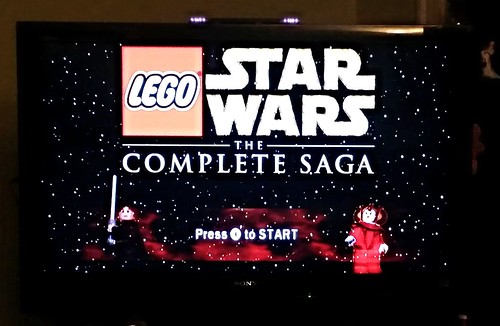
Screen shot of Star Wars Legos video game on the Wii
After my recent semester finished, I played this for many hours on my Wii.

We also have mobile games and these too are curious.  Some are simply time-killers to occupy us in the in-between spaces of time when we would be twiddling our thumbs or growing impatient with waiting in line.  Others like one of my favorites, Ingress, brings us into the physical world to explore it, play with others, and learn more about the world than we knew otherwise.  Other games pit us against our friends (Words With Friends) or we look to help out our friends in the game. 

There are games with rich and complex graphics that really does make you feel you are in another world or the games wherein you put in hundreds of hours to complete--hours that can feel like "work" but are still somehow rewarding.  Such games require an amazing amount of concentration, dedication, and intellect to complete.  Other games are equally demanding but don't necessarily have a "complete" phase wherein the person feels they have "beat" the game. 

Then, of course, there are the secondary elements of gaming--the critique blogs, vlogs, and podcasts (Geek and Sundry is one of my favorites), the gaming competitions, Twitch tv, LARPing and Cosplaying around video game characters or when video games become movies. 

 We "play games" for many different reasons: to relax, to engage our brains, to be social and connect with friends, to enter the "zone", and many other reasons.  We can often see the word "game" used derisively and yet, the modern gaming world is such a rich world of interaction and exchange among people. 


It seems like games are everywhere in our culture and I know that some people see that as a sign of being somehow lesser and yet, I can't help but think about how I've seen games be a place where I make friends, learn more about the world, and even a place that brings me a lot of joy. It requires a variety of skills from hand-eye coordination to social interaction to critical and creative thinking to even physical ability. Thus, I tend to think there's a lot more going on with gaming than many people realize.  

Friday, January 8, 2016

Module 1 Example: Now Paging, Comics!

So for the first post on this blog, students should be exploring the following questions: 
  1. What popular culture are you drawn to and why?  
  2.  Why is it important to you and what value do you get from engaging in it?   
  3. What do you anticipate you will learn about that particular form of popular culture in this course?
  It's a little bit different for me since I've already taken this course, but I can speak to my own journey of learning with comics. 

 I started reading comic books in middle school in the early 1990s.  I would spend much of the money I earned from my paper route at the local comic book store.  I read mostly Marvel Comics (they publish Avengers, X-Men, Spider-Man, Fantastic Four), and just really enjoyed the adventures and the super-powers.  Pretty straight-forward.  However, my comic-reading continued on and off through high school and college.  


Cover to Whiz Comics #31 from https://archive.org/details/fawcett_Whiz_Comics_031
Cover to Whiz Comics #31
It was something I did for entertainment, until I got to graduate school, wherein I learned that two very important lessons.  The first was that comics could contain serious and legitimate content.  Herein, I was introduced to powerful works like Maus, Persepolis, Understanding Comics, Watchmen and many other popular and powerful graphic novels.  The second thing that I learned was that I could study comics and write about comics from an academic point of view.  This blew my mind and got me really excited.  So I began to read, research, and write a lot about comics--eventually--getting the opportunity to teach this course.  

Studying comics has been a great experience for me.  It has not only taught me more about comics--a form of entertainment, I greatly enjoy--but it has made me think differently about how we communicate, symbolism in images, how I make sense of story-telling (be it in comics, film, novels, or radio/audio), and a better appreciation of the arts as a whole.  Comics have introduced me to some of the most amazing and skilled people in the abstract (that is, I'm not aware of certain artists' work) and in the concrete (I've met many artists through my interest).