HISTORY: The first bottled water was sold in the US by Jackson's Spa in Boston in 1767. The water had supposed therapeutic benefits. In the 1850s bottled water was a status symbol, it was seen as clean and stylish (Elite culture). During this time it was also widely purchased due to fears of typhoid and cholera in municipal water supplies. It hit its big break into the mass culture in the1970s after the development of the PET plastic bottle. The 2000s saw a war between tap and bottled water, and more recently, environmental concerns have led to the creation of much lighter plastic bottles.
There are many aspects that invoke the idea of standardization and pseudo-individualization. Bottled water is everywhere. You go to any event and you can't get a cup of water or find a bubbler anywhere. In most cases you can't bring your own, so you have only 1 option if you choose to drink water: buy a bottle. We also see bottled water in TV, movies, advertisements, music videos, print ads. Many restaurants now ask you if you want water from the tap or bottled.
Pseudo-individualization comes from thousands of water brands available worldwide. Check out this site that lists the world's bottled waters. I was astounded at the numbers. There are numerous types: spring, purified, artesian, well, glacial, deep sea, rain, and iceberg....BUT it's all just WATER. This artifact is a prime example of commodity fetishism. A bottle of Poland Springs costs 1/4 of Voss, and as such it's perceived as better. While there are subtle differences in mineral content and acidity, there is no reliable data proving one is necessarily better than another.
This example contributes to distracting us from authentically changing the world and reinforces our connection with popular culture by just existing. Plastic is becoming a global problem. There is far more in existence than will ever disintegrate or be recycled. Advances in public water systems and filtration systems worldwide have reduced the need for bottled water and yet as Americans, we are addicted to it. It's not much more difficult to use a reusable water bottle and fill it as you go, but we don't. Purchased water bottles carry a warning on the back to not refill them, contributing further to the problem. Much of the world is addicted to convenience and we don't make lasting, meaningful changes unless forced to do so.
Sources:
https://myownwater.com/blog/history-of-bottled-water
Showing posts with label standardization. Show all posts
Sunday, March 1, 2020
Tuesday, March 14, 2017
This week I'm going to talk
about hand motion paper towel dispensers. The reason I'm going to talk about
this is because many places have them. Going from hotels to restaurants pretty
much any place that has a bathroom there is a hand motion paper towel dispenser.
These dispensers are continually producing new versions of itself, there are
many different brands regarding this. I guess we could say that distracts us
from real world change because now we're just kind of used to things doing
simple actions for us. Like simply getting your own paper towel rather than
just waving your hand in front of it, automatic doors that open and close for
us When entering and exiting stores. Not to mention the motion toilet flushing
that is also in many places with a bathroom.
This does socially cement
people to the popular culture because I'm sure most of us know and have used a
hand motion paper towel dispenser. Of course, this is a good invention,
considering I could keep us from a lot of germs with the old-fashioned handle
that you push up and down to get your paper towel. Although we could just take
some paper towel with our hands but that just wouldn't seem normal in modern
day.
Labels:
2000's,
Culture,
patent,
popular,
standardization
Sunday, March 6, 2016
Old Song, New Riffs
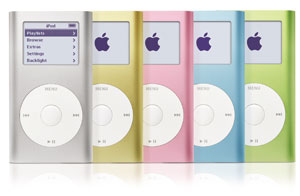
These platform changes reflect technological advances over the last 60-70 years, but all offer the same thing: music. With each generation comes a new means of listening, and new music is released only on the newest platform. Older music usually makes its way to the new platform as well, rendering the older one obsolete. In this way, people can listen to whatever type of music they want-- as long as its with the technological trends. For example, The Beatles' Sgt. Pepper's Lonely Hearts Club Band was released in 1967 and has, at some point, been available on every aforementioned platform. Listeners are distracted from real-world change every Friday, when new albums are released, and then talk about it with other music aficionados for the week- until the following Friday. This creates a cyclical style of consumption that keeps people coming back for more. Whether you've been around since the 80s and seen the evolution with your own eyes, or whether you listened to your first song on Spotify, you've got to buy in to keep up. Or you could just listen to the radio.
Subscribe to:
Posts (Atom)