Showing posts with label film. Show all posts

Friday, February 21, 2020

Tropes vs Women


This series of six videos explain six common tropes regarding women. This series is aimed at Hollywood films, television series, video games, and comics though they are found elsewhere as well. The first trope is the Manic Pixie Dream Girl, a "bubbly shallow cinematic creature that exists solely in the fevered imaginations of sensitive writer-directors to teach brooding, soulful young men to embrace life and its infinite mysteries and adventures"-Nathan Rabi. The second is about Women in Refrigerators. This trope was coined by Gail Simon and features female superheroes who have been depowered, raped, or cut up and put in the refrigerator. Third is the Smurfette Principle. This is the tendency for works of fiction to have only 1 female amongst an ensemble of men, despite the fact that roughly half the human population is female. Next came the Evil Demon Seductress. This one is pretty self-explanatory, a female demon, vampire, alien, etc. uses her sexuality to seduce, manipulate, kill, and sometimes eat men by luring them into her evil web. The Fifth is the Mystical Pregnancy. This dates back to the bible. Characters are reduced to their biological functions. This is also called reproductive terrorism or torture porn. The last, and very destructive is Straw Feminist. This trope involves the distorted view of feminism, an exaggerated character is created and filled with misrepresentations, oversimplifications, and stereotypes to make it easy to discredit feminism.
Image result for avengers banner
I loved The Avengers, but think about how the women are portrayed.

For me, these videos were eye-opening. I can say I had noticed some of these things before but never knew they were used as often as they are. A common thread for most of them is the women are highly sexualized and objectified. The exception was the straw feminist, who is portrayed as more masculine and pushy, unattractive, often fanatical. The biggest danger of these is their overuse. They paint women in a bad light, they perpetuate stereotypes, and they encourage disrespect and mistrust of women. These attitudes and beliefs make it harder for women to achieve equality. They make us look like either dumb, shallow, helpless creatures, or evil and crazy. These messages are found everywhere on social media, in advertising, in literature. When I really started to think about it, the examples are staggering.

Image result for sports illustrated cover
No better example than the cover of a men's magazine.

The information in these videos ties in nicely with other materials we have explored. I feel these tropes also fit in with the video for this module on African American women and sexuality. I think they are portrayed often as part of the Evil Demon Seductress trope. While not always a demon or vampire, they are portrayed as using their sexuality in a manipulative way. This series also mentions the Bechdel Test as part of the Smurfette Syndrome trope. The concept of the Male Gaze is also prevalent in these tropes. Women are objectified, they are a muse, and if they resist and fight to be more, they are crazy.  

Image result for quotes about women

Wednesday, April 3, 2019

Postmodernism as Explained by a Drunk Man and Jordan Peele

The video was broken up into two parts: “Repeating History,” and “The Good, the Modern, and the Postmodern.” These two parts give us a quick history on the thought that led up to Modernism. The narrator is at a party talking to a woman who misuses the term “Postmodernism.” The rest of the video is meant to act as if the narrator spends the entire party, and even the morning after, explaining in layman's terms what Postmodernism is.
“Part 1: Repeating History” includes a background of Classicism in the Greco-Roman world, which would, in the 18th century, develop a counter ideology called Neoclassicism, which focused on empirical research- Science and logic were used to explain the world. The next counterculture in line was Romanticism, which challenged the Neoclassical thought that facts are more important than emotion. Romanticism would focus on the value of emotionality and personal experience. This would become a point of contention, and the two schools of thought were at odds with each other.
“Part 2: The Good, the Modern, and the Postmodern” Introduces Modernism, explaining that in the context of WWI and technology being made to kill people, creating the Lost Generation and also had brought out names such as Karl Marx, Friedrich Nietzsche, and Sigmund Freud. Social, Economic, and Political beliefs were questioned. Then, Postmodernism comes in as the “rebellious child” as an inverse to the structural thought of Modernism.
The narrator continues to provide differences among Modernism and Postmodernism, bringing back to the progression of technology. Modernist thought praised progress in that technology is the way that humanity improves, whereas Postmodern thought believe that progress may not necessarily be a good thing.One of the last comparisons made in the video was the difference in categorical preference between Modernists and Postmodernists. Modernists love genres, clear cut lines, and nicely fitting things into categories, whereas Postmodernists value what makes something different and unique.
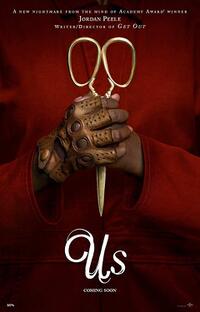
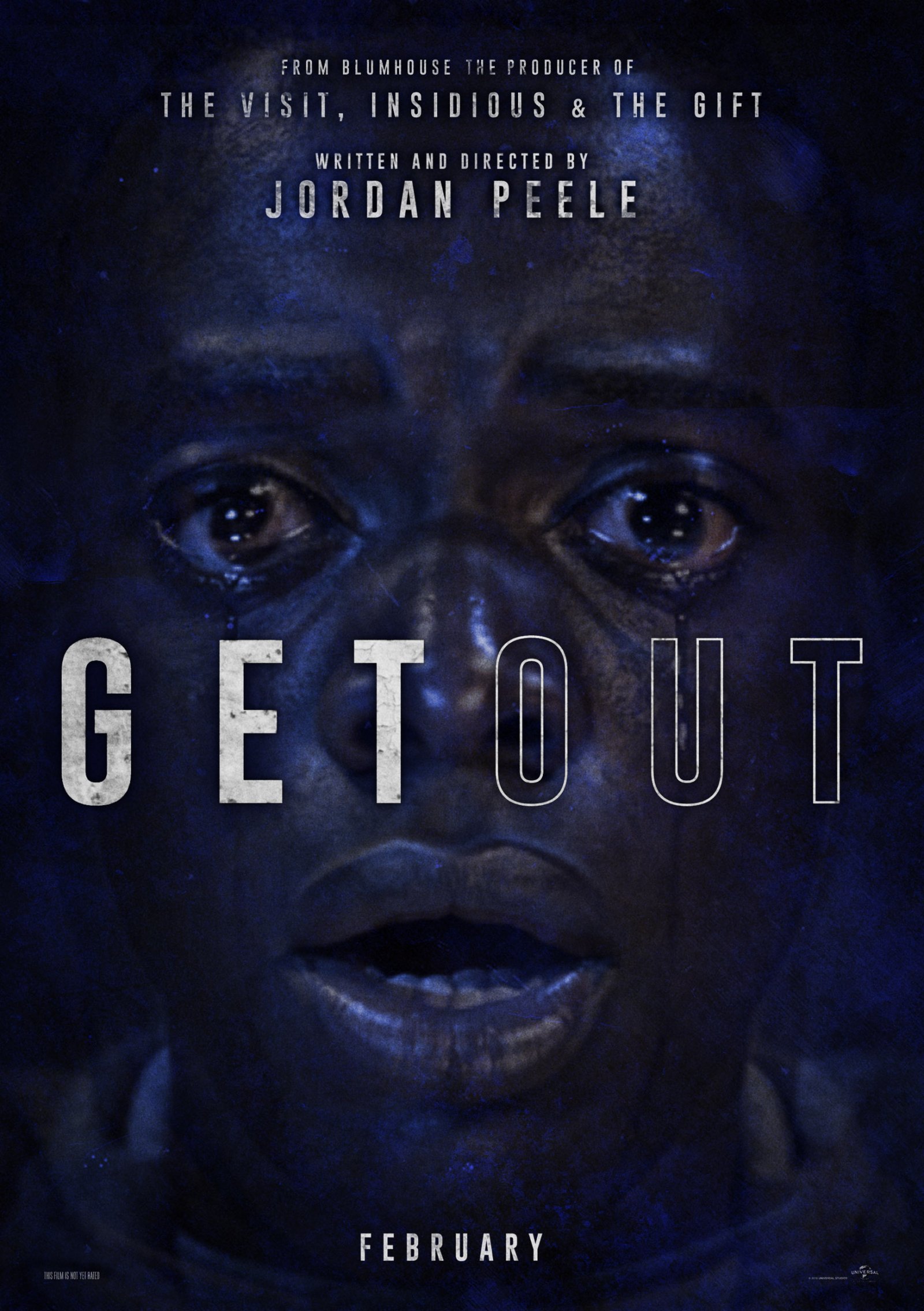
The idea within the video in which categorizing vs. celebrating uniqueness can be directly related to popular culture. Take, for instance, Jordan Peele’s horror/thriller films that have come out in recently. The creation of both Us (2019) and Get Out (2017) in itself is a great example of postmodernism in contrast with modernism. Jordan Peele is known for co starring in the comedy sketch series Key & Peele. His comedic reputation had not failed to be seen within his horror films. If Jordan Peele were to be creating movies and understanding himself as a filmmaker in Modernist thought, he would stick to purely comedy and stay within that genre. This is not the direction in which Peele had decided to go in, however. He, in following with postmodernist thought, genre-bent horror and comedy in Us (2019). Even Get Out (2017), a thriller with little humor involved steers away from the understanding of what kind of filmmaker Peele would be in comparison to his past.

Tuesday, February 26, 2019

Succubus Sexy and Entertaining; Incubus... Terrifying and Rapey

The Evil Demon Seductress is a trope described by the YouTube channel Feminist Frequency as “Supernatural creature (i.e. demon, robot, alien, vampire) disguised as a sexy human female.” Commentator Anita Sarkeesian continues to give a large list of examples within the film industry in which this trope can be found. Popular examples included characters such as Jennifer Check (played by Megan Fox) from Jennifer’s Body (2009) and Mystique (played by Rebecca Romijn) from X2 (2003). It sounds harmless in that the characters make for good entertainment, but Sarkeesian identifies the underlying misogynist stereotype behind it which is that women primarily use their sexuality to manipulate, trick, and control men. She continues to add that this may give women the impression that their only social power is their sexuality.
The trope can be seen all throughout popular culture, but the video focuses on the film industry. Returning to the examples provided, we can see Jennifer from Jennifer’s Body (2009) is a cheerleader (an already hypersexualized trope) possessed by a succubus. For those unaware of what a succubus is, they are in, in demon mythology, female demons which seduce and have sex with men. In the case of the 2009 horror flick, they are killed as well. The succubus lures men in with her sexuality to ultimately kill them. There’s a perfect scene where this is portrayed, in which Jennifer lures a football player into the woods, seduces him, but they stop due to all the creatures in the wood staring at them. Jennifer realizes she’s lost his attention, and unzips her shirt to reveal that she is wearing nothing underneath. Whilst he has her attention once more, and ends up turning into her succubus form and kills him. This same theme repeats with her other victims. The next example used was Mystique from the movie franchise based off the Marvel comic series X-Men. The movie specifically named was X2: X-Men United (2003).  There is a scene in the movie where Mystique seduces a security guard. She brings him over a couple of beers, which are drugged, and eventually she lures him into the bathroom, where he finishes his beer and he becomes unconscious, and from there she can complete the mission, injecting him with iron.
There are many more examples of The Evil Demon Seductress, for example the POV horror anthology V/H/S (2012) includes a segment in which a vampire-like female  demon devours two men. Sarkeesian notes that this trope is popular in that it gives into objectifying females. This is appealing to the male audiences. It is not, however, rare to see this role switched, in which a male would seduce a female and ultimately kill her, but rare for it to be a male supernatural being unless we’re speaking of examples like The Incubus (1982). Most of the time, the sexual circumstances are depicted as rape instead of something seemingly consensual (aside from being murdered, of course), found in horror such as Rosemary’s Baby (1968).  Honestly, other than Rosemary’s Baby (1968) male incubus-like horror is not as popular. Interesting to note that the popularity of the evil demon seductress trope is contingent on the women being the offender, otherwise it would be a disturbing supernatural rape scene instead of a sexy woman seducing a man. Neither are positive things.


Sunday, January 22, 2017

Im locked up..they won't let me out

Film has always been an outlet for me. My father being a film producer would take me to classes with him at Hampshire and later on at Columbia. I watched him make films with meaning and purpose, to tell stories of those that did not get the recognition that they deserved.  I witnessed first hand the power of film and media. I made my first short film at 7, with one of my closest friends Alexis. There was no script, formal set or even great actors. We just went with what we were feeling at the time. At 7 why were we feeling like convicts? I am not sure, but the opening scene was me behind bars staring into the camera, with tears running down my eyes to show the pain. The bars were the second floor metal banisters and the hand cuffs were socks. Needless to say our creativity was on another level.

Why at 7 years old were we making movies about being in jail? Is it because something we watched that may not have been intended for us? Popular culture in 80's and 90's were to watch shows on crime. You had shows like Cops, and Law & Order that people were loving. But the effects of watching these shows have left more of an impression on us than we think. Did we think that maybe it was cool to creative violence and punishment for entertainment?

I anticipate learning more about the consequences of consuming unhealthy and uncensored media. I want to understand why our beliefs, culture and values are depicted in what we surround ourselves with.


Sunday, May 8, 2016

Hegemony & Sex in Popular Culture


I was reading an article in last week’s New Yorker and it reminded me of  the topic of hegemony and the back and forth negotiations between the general public and elites. The article was on the Hays Code, a guideline which dictated how much sex could be shown and discussed in movie during the 1930’s. Prior to the Hayes Rule movies were generally more open about the topic of sex and contained “sardonic bluntness” and “suggestive dialog”. Some people were concerned about this and instituted a set of rules which Hollywood followed for many years. Sex was such a taboo topic that married couple were new shown sharing a bed rather they slept in separate twin beds. Movies would replace sex with jokes and the genre of the romantic comedy.  Later, in the 1952, movies became protected by the 1st Amendment and as the rules loosened, sex in movies became more accepted (and probably expected) by the public. Movies would again treat sex as less of a taboo topic. As time went on the depiction of sex in movies and in popular culture in general has become pretty much mainstream. There have been time, though, over the years that the self appointed moral police has tried to scale back the amount of sex allowed in certain media. In the 80s Tipper Gore pushed for and got records to place warning labels on “explicit” record and the 90s Senator Jesse Helms tried to block funding to any art which he deemed immoral. This back and forth concerning the issue of sex in popular culture has been continually progress in the direction of less censorship.

http://www.newyorker.com/magazine/2016/05/02/what-the-hays-code-did-for-women

http://www.publiceye.org/theocrat/Mapplethorpe_Chrono.html 

Tuesday, February 2, 2016

Western Themes in Mad Max: Fury Road


The first film with a western narrative that came mind was one of the best, in my opinion, to come out last year, Mad Max: Fury Road. Set in a post apocalyptic world, Mad Max tells the story of Max, an outsider and loner, as well as a group of very strong women, who escape captivity from an evil leader of a corrupt society and his "war boys". The movie then becomes an extended chase scene (with amazing cinematography). Underlying this action is the group’s desire to free this society and give back control of its resources, most importantly water, to its people. 


I think this movie has many western themes and motifs. Replacing the American frontier is a post apocalyptic world. Its desolate landscape conjures up images of the American southwest. Water is scarce and there’s a battle for control of limited resources. This, I think mirrors the cowboy in the American west securing its resources and land. Through this battle Max and the women attempt to bring order to the constant chaos of an uncivilized place. He and the society he finds himself in are under threat from corrupt and hostile forces. Max’s character has all the elements of a cowboy. He’s white, self-reliant, strong, stoic and very independent. He’s also at heart a moral character. At one point he wants to set out into the landscape on his own. In the end, however, he decides to protect those in danger and accompany the group of women in order to follow through with their plan to bring order to what’s left of society. As Jennifer Moskowitz point’s out in The Cultural Myth of the Cowboy, or, How the West Was Won the myth of the cowboy began as a need to pull together a fractured nation. The world in which Mad Max takes place is also fractured and chaotic. Its in need of a figure around which a community can coalesce. One of those figures is Max.
Photo: http://i.kinja-img.com/gawker-media/image/upload/bs0a2p6jyovlotmmwlre.jpg

Monday, February 1, 2016

Module 3 Example: The Cowboy of Mars

PROMPT
Explore and discuss a cowboy or Western motif in a narrative (film, TV series, novel, comic, video game, etc) that isn't a straightforward cowboy or Western.  In your post, you should
  • Briefly explain the narrative (1-2 sentences).
  • Discuss how a character is a cowboy and/or how the narrative fits the Western genre.
  • Identify specific aspects of the narrative that connect with the ideas in the video on The Cowboy and the Western in Popular Culture.
Relevant Tags:  Cowboys, western, 

Example:  The Cowboy of Mars

As I mentioned in the video, cowboys and westerns do not have to take place in the West or in the past.  They can take place in the future and The Martian is a good example of that.  In this movie (adapted from a novel), the main character, Mark Watney finds himself unexpectedly stranded on Mars when his crew takes off without him.  Stuck in a hostile environment with very little food and shelter, he must find ingenious ways to survive long enough for a rescue team to capture him.  

'The Martian' Movie Poster -- Udvar-Hazy Center Chantilly (VA) 2015


Initially, you might not think Watney (played by Matt Damon) to be your typical cowboy.  After all, he is not saving townfolk and he is not fighting "bad guys." However, let's look at some of the things that character does.  First, he is existing in a place where life (for humans) is still being worked out and Mars is largely a hostile world--he cannot survive without his spacesuit.  Add to this the many long shots of sand and rocks and it feels very much like "the west" but with a red tinge.  As for Wattney, he is white, male, and certainly masculine (in earlier parts of the film, we see a very buffed Damon--mostly to contrast with the second half of the film, but it's made clear--he's quite strong and a very capable man).  Now in the film, he doesn't deal with foreign threats per se, but as the botanist, he is the only person among the crew that could make life or sustain life in the long run, so in that capacity, he is there to tame and bring order to the planet.  Though he is ultimately in need of rescue, he needs to be the fully idealized man to survive on the planet long enough to hitch a ride from his cremates and his ability to survive against the hostile Mars renders him a cowboy.