Showing posts with label racism. Show all posts

Saturday, April 6, 2019

Oogli Yawabooby Razzle Dazzle Root Beer: Racism in Howdy Doody


In the 1950 Howdy Doody comic No.6, one of the stories titled "Adventurers Club" from Dell Comics show friends Howdy Doody and Dilly Dally overhear an offer being made to whoever can produce the most unusual creature of the year, and decided to go on a voyage to the Golly-Wolly Islands to discover it. Unfortunately, the captain of the ship brings Howdy and Dilly to the wrong island, which is inhabited by cannibals.The issue (pun intended) with this comic is mostly the cultural priorities that are outlined in the Comic Code Authority of 1954 go into detail about what is unacceptable for the public to be reading, however, when addressing racism or things of the like, it is one vague blanket statement that reads “Ridicule or attack on any [...] racial group is never permissible.” But the content present in the Howdy Doody comic doesn’t necessarily identify a racial group, but creates one within the Howdy Doody universe which depicts islanders as more animalistic than human. Granted, the Comic Code Authority of 1954 was outlined four years after the publication of this Howdy Doody comic, but the real underlying issues are not fixed to the extent that other issues, like keeping the sanctity of marriage or prohibiting the use of the words “Horror,” “Crime,” and “Terror.”
The comic does not explicitly identify the ethnicity and/or race of the islanders of “Golly-Wolly Island” but seem to still perpetuate gross stereotypes of non-western island peoples. There are plenty of examples of this shown within the comic. First, we can see a form of black-face in how the islanders are stylistically drawn with overly wide and large lips. They seem to take up most of the islanders faces. This is similar to how black-face was used in Minstrel shows. The hair and costume of the islanders is primal, with the use of bones and various piercings as accessories. The islanders are also cannibals, as to add to the already animalistic characteristics they were given, they also seem to be not as smart as Howdy and Dilly, the main characters whose stupidity is the main focus of the comic series.
There is also a panel in which an islander, who we are meant to assume is some sort of shaman or spiritual figure within the population, wearing a ritual mask, chanting “Oogli Yawabooby… Razzle Dazzle Root Beer!” When asked what it was all about, a islander explains that he is asking the ancestors if they approve of Howdy and Dilly as a meal. This is an obvious play on non-western ritual practice, especially the importance on spiritual relationships with ancestors. From here, an actual gorilla appears, and, aside from the amount of body hair on the gorilla, there is very little difference in the way the islanders and the gorilla are depicted.
Popular culture has a role in perpetuating these stereotypes, especially in these comics. They seem light-hearted and for satire, but even comic books depicting dark-skinned, misshapen bodies in contrast with the white men and women depicted in
all of the comics create a harmful divide between “us” and “them.”


Thursday, May 3, 2018

Module 15 - Zombie Narratives

I will be analyzing module 12. This module contains the popular culture of zombies. We were assigned to watch one of the earlier movies. I choose to watch the movie king of the zombies, produced in 1941. I will also be dissecting the subject through the lens of race. Although slavery of the African-Americans was outlawed, that does not mean they were culturally accepted immediately. This was displayed in the movie on several occasions. One occasion was when the Mantan Moreland, who played the character Jeff. Jeff and his white associates, seem to be on good terms, but Jeff remains a subordinate as he is their valet. The portrayal of an African-American during the filming of the movie would hold African-Americans to a secondary role. Both actors and the characters that were portrayed would generally be secondary characters. This is affirmed as all of the entire servants of the Dr. Sangre were only of color. Jeff is casted as a comedic relief for the movie, making little jokes and talking about with smart remarks. At one point, Jeff asks to spend the night with his white associates, who were a portrayed as a more prestigious role such as a pilot or a colonel in the military. Even the main evil antagonist was a white actor as well. The portrayal of the servants in the movie shown that they were happy and content with their position in the cultural hierarchy. Not interested in talking back to their master or achieving more. At one point, the slaves notice one of Jeff’s associates was slacked and converted into a zombie. The servants were surprised because they have never seen a white zombie before. This does not seem normal to the servants, but because of the circumstances, the Doctor has to kill one of the associates to prevent further snooping. Eventually, Jeff and his remaining associate manage to escape the island and return to the mainland. Although strides and changes have been made as popular culture constantly changes, a good example of this would be Star Wars. They have successfully casted a minority, as well as a female lead. Despite a few major movies recently, representation of women and minorities in movies are still bleak or unchanged (Bahr, 2017)

CITES


King of Zombies. Jean Yarbrough. Perf. Dick Purcell, Mantan Moreland, Henry Victor. Distributor, Sterling Productions inc. 1941. Film. 
Bahr, Lindsey. "People Want to See More Diversity in Movies, but It's Not Happening Fast Enough." Business Insider. Associated Press, 31 July 2017.Web. 26 Apr. 2018.
x


Sunday, April 17, 2016

Night Of The Living Dead


Night of the Living Dead is a 1968 zombie film. Within this film the main character, Ben hold up in a Pennsylvania farm house while at the same time trying to protect themselves from the recently dead - the zombies. However, this film tackles race not within the movie as much as it does on the outside.

Though from the outside this movie may look like the classic zombie horror film it made a giant decision within its casting. During a time where black actors were not often cast as the lead, Duane Jones portrayed the main character Ben. During the 1960's black characters were often given the over the top personalities as we saw in Spike Lee's "Bamboozled," but instead Ben was a central character with no "ethnic" personality traits. As reported in How Casting a Black Actor Changed, Night of the Living Dead, "Director George Romero agrees with that recollection: “Duane Jones was the best actor we met to play Ben. If there was a film with a black actor in it, it usually had a racial theme, like 'The Defiant Ones.' Consciously I resisted writing new dialogue ‘cause he happens to be black. We just shot the script. Perhaps 'Night of the Living Dead' is the first film to have a black man playing the lead role regardless of, rather than because of, his race ("How Casting a Black Actor Changed, Night of the Living Dead.")."  Even the director knew that he was taking a large risk by portraying a script that was written for a non-specific race with a black actor.

Though we still see racial casting problems (#OscarsSoWhite, anyone?) this movie took a giant step towards the right direction. Of course there will always be problems in casting for race specific characters, but for a character that can be portrayed by any race, the door should be open for any one to be casted. In this case Romero knew that Jones was the best character to portray Ben, regardless of the times and the fact that black actors didn't usual play the "serious" role.

Sunday, February 21, 2016

Spider-Man 2099: Combating Hispanic Stereotypes


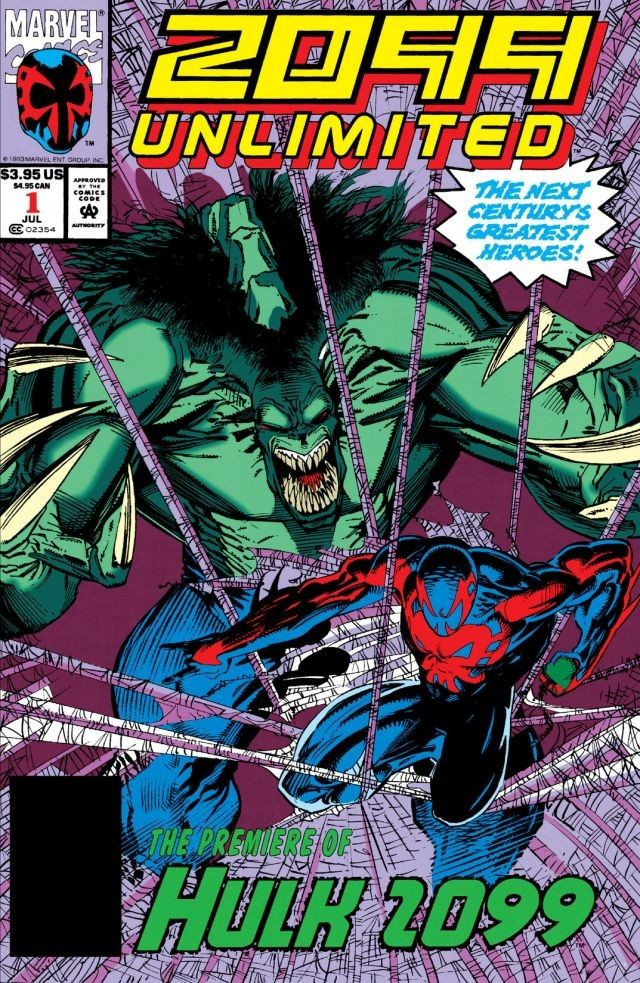
The cover art for issue #1 of Spider-Man 2099 (Image Source)
Most of you probably don't know this Marvel character. Despite that, he's actually my favorite superhero of all time. Spider-Man 2099 (written by Peter David) launched in 1992 as a part of Marvel's 2099 Universe line of comics. This universe takes place in the year 2099, as you may have guessed, and included several futuristic versions of existing heroes and villains, such as Doom 2099, Punisher 2099, Hulk 2099, and one original hero (well, more of an anti-hero) named Ravage 2099.

Even though this is a future version of Spider-Man, this one isn't Peter Parker. I assume all of you know who Peter Parker is, because if you don't, I have to assume you've been living under a rock for the past 20 years. Spider-Man 2099 is actually a half Irish, half Hispanic man named Miguel O'Hara. Miguel worked as a scientist for a major corporation named Alchemax, which controls most of Nueva York (the 2099 version of New York). He's unhappy at the company and feels they are extremely corrupt. In an effort to stop him from leaving Alchemax, somebody from the company slips him a hallucinogen that bonds to your DNA. Trying to rid himself of the hallucinogen, Miguel attempts to perform a procedure that would revert his DNA back to it's original state. However, somebody tries to sabotage him, and ends up splicing his DNA with that of a spider, giving him even more spider-like powers than the original Spider-Man (he has organic webbing and talons on the end of his fingers).


2099 Unlimited #1, featuring
Spider-Man 2099 and Hulk 2099
(Image Source)

What makes Miguel so unique is that he's not only the first Latino representation of Spider-Man, but he also avoids falling to the many stereotypes associated with Hispanics in popular culture. Miguel is a well spoken, intelligent man (as I mentioned before, he's a scientist). According to the Cobbina article, Hispanics were seen as crack users during the '80s. As such, Hispanics were often seen and portrayed as criminals within popular culture. O'Hara presents us with the exact opposite: a crime fighter. Considering this series was released in 1992, it was very close to the time where these Hispanic stereotypes were at their height. Spider-Man 2099 not only exists as just a futuristic version of Spider-Man, but also to help combat this stigma against Hispanics and how they are always portrayed as some sort of criminal or drug user.

The series was cancelled after 46 issues. However, Miguel was brought back in 2014 in Daniel Slott's Superior Spider-Man, due to demand for the character to return. This lead to Spider-Man 2099 getting his own brand new ongoing series, and he is now proving to be more popular and more relevant than ever before.