Even from a young age I remember doing the "Rock on Sign." You know, the one with index and pinky up, with the other fingers down to form "devil horns?" There has always been mixed emotions on this sign ever since the beginning. Is it a harmless sign to promote heavy metal culture, or is it a sign of worshiping the devil?
I think so often we see the sign and think "Hail Satan," as I'm sure that's where the sign originally began in meaning - as it did begin from a darker, edgier type of music. However,I found an interesting article on premierguitar.com where the author John Bohlinger found an interview with Black Sabbath's Ronnie James Dio (who contributed to an increase in popularity with this gesture) who reported that the way he used the sign. He said, "It’s not the devil’s sign like we’re here with the devil. It’s an Italian thing I got from my grandmother called the 'Malocchio.' It’s to ward off the Evil Eye or to give the Evil Eye ("What Does the Horn Hand Mean")." If that's true, then one of the most popular bands could have actually been using this sign to get rid of the evil eye...or give it. But this sign isn't just used in music anymore. Think about going to a University of Texas game, as this is their "hook 'em horns." Certainly in this situation the stadium is referencing bull horns, not the Devil's horns. Either way, this signal, even with a dark beginning, has morphed into a symbol of pop culture in general. At any concert I have ever been to, whether it be a country concert, pop concert, or rock concert - I have seen this signal be given. I think it is more to say "Keep playing, you're going great" rather than the edgier idea of summoning the Devil to the convert (of course).
One thing I really found interesting during my research on this topic was the transformation of this gesture in pop culture. Of course it may have started with darker bands trying to sign they were "worshiping the Devil," but it has really transformed into being something much less. It is a signal that all people connect with in all types of music, because it simply translates now into "rock on" - with all signs of the Devil left behind.
Prompt After watching this week's video on semiology and signs, let's take a look at signs within popular culture. You should identify and explore a particular sign from within popular culture. Within your post, you should do the following:
Identify (and include an image of) a particular symbol in popular culture. This can be literal sign such as a logo of a company, a symbol or icon within a particular show or series (e.g. Superman's "S" or Batman's "bat" icon--though now that I've mentioned those two, you'll have to find another). Be sure to explain where it is from (e.g. from a novel, movie, show, etc).
Explain within the symbol, what is the following:
Signification (the whole meaning)
Signifier (form)
Signified (meaning/concept)
Myth (the bigger ideas that the sign introduces)
In doing this exercise, explain what you found interesting and new.
This will be a trickier post than previous and students should really make sure the spend sufficient time with the video to make sure they understand what it is asking. Relevant tags:Semiology, signs, symbols
It's clear that more is going n than a simple gesture between two humans, no? So for this post, I'm delving into the symbolism of the fist-pump.
So let's start! The signification here is that it is called a "fist bump". We use that as shorthand for what we are talking about. The signifier--that is, the form that it takes is the meeting of the fists--the "bump" as it were. As for what is signified--the meaning behind it all--is that it is a friendly greeting among two people who know each other.
However, the myth of this symbol is more intriguing at least for me. The fist-bump connotes something different. While the history of the handshake is rooted in the tradition of revealing that you are unarmed and building trust by making one's self vulnerable by approaching and coming into contact with someone, the fistbump tells a different story. It is a closed hand meeting another closed hand in an act of symbolic violence (literally, meeting fist with fist). In this interaction, it indicates less trust and compassion and more distance between people. One does not open their hand to meet another but closes it and strikes this other person. Given that its history is tied to sports, it is also indicative of an often hyper-masculine arena where signs of weakness are frowned upon. Therefore, to meet even teammates with open hands hints at weakness. Given this origin and its growing prevalence of the last 40 years while women have increasing asserted their rights and equality, it makes me wonder if in some ways, the fist-bump is a further attempt at maintain dominance in an increasingly diverse culture.
The importance of play has been identified as key to the early development of children's brains from 0 to age 4. Play can strategically assist a child in an assortment of basic and advanced processing of information including physical equations, logical thought process and vital role interactions with others.
Play is commonly associated with toys, although not necessary, toys are aids in children's play so that instead of creating and designing a cardboard box as a playhouse - playhouses are designed, mass produced and recreated that have a solid history behind them. I am a big fan of playhouses or doll houses, for me, they are a very elegant and elevated level of play; but it isn't necessary to use a dollhouse to get that same climatic feeling during play, as the imagination can provide any individual at any age a significant feeling that you want to encounter during playtime.
So why the abundance of toys and why are they consistently repeated over time? What does the general public desire the most when they want a truck ....but a different truck? Are we a bored society that toys must be stocked locally at a gas station, and if so then what does it mean that toys have become such a cheap and disposable means of entertainment for our children?
I don't have a conclusion that an abundance of toys on our psyche is necessarily a negative one; but one could argue that it limits even handicaps the power of imagination and that acceptance of overage of toys empowers it as a vital cog in the wheel of consumerism. We accept that when we walk into a store that we can be offered a robot in about 20 or more different varieties that will modernize its version repeatedly on perhaps a 6 to 12 month basis. The previous versions are phased out and can become hard to find.
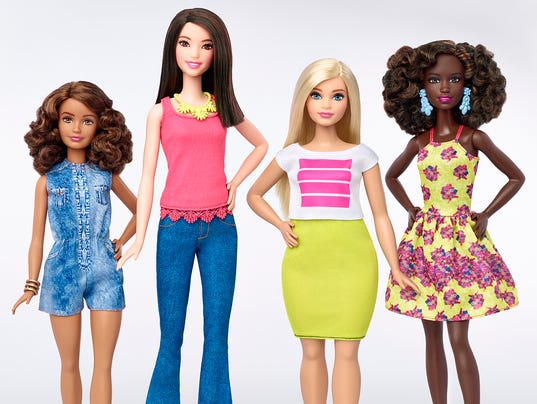
The toy culture has a prominent place in society globally and has matured into nostalgia and collector's items creating a new illustrious and viable contending industry. Therefore the toy industry has become a force to be reckoned with. There are no signs of slowing down or stop of over mass producing one toy item such as a baby doll or even Barbie dolls!
The psychology of toys is as substantial as the effects of television broadcasts comparable to the images that we are subjected too through play with mass produced toys. Children naturally seek a reflection of themselves in everything from family, to their economic disposition as this is one innate way a child finds a way to easily transition, connect and reflect as they play.
Although mass production creates a crazy amount of variety in toys it has become repetitive but in various forms - the one item mass produced does not apply to all children at play.
With this much influential toy culture has at such an early developing stage for children; what responsibilities should parents take when introducing toys? Or is this a fabricated unfounded culture that is harmless and simple in its practice.
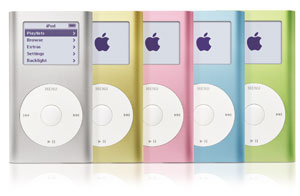
Music has existed since the dawn of recorded history, but the music industry didn't become lucrative until people could own music. Vinyl records gained popularity around the 1950s/1960s and required listeners to purchase expensive turntable and speaker equipment. The LP era lasted until the rise of cassettes in the 1990s, which boasted portability and affordability. All a person needed was a Walkman, headphones, and, if they were lucky, a cassette player installed in their car. Next came sleek CDs in the 2000s, and yet another equipment upgrade-- trade that Walkman for a portable CD player, but hang onto those headphones! Later in the 2000s came the dawn of the digital era. Music fans shelled out $200+ for iPods and paid around 99 cents per song (or found free downloads on shadier parts of the web) on iTunes, but the transition meant no physical harm could come of the music. Today, subscription-based streaming reigns supreme. US listeners can choose from three major options: Spotify (free with an annoying commercial every six songs, or $9.99/month), TIDAL ($9.99/month for the basic option, or $19.99 for hi-fi), or Apple Music ($9.99/month or $14.99 for a family subscription).
These platform changes reflect technological advances over the last 60-70 years, but all offer the same thing: music. With each generation comes a new means of listening, and new music is released only on the newest platform. Older music usually makes its way to the new platform as well, rendering the older one obsolete. In this way, people can listen to whatever type of music they want-- as long as its with the technological trends. For example, The Beatles' Sgt. Pepper's Lonely Hearts Club Band was released in 1967 and has, at some point, been available on every aforementioned platform. Listeners are distracted from real-world change every Friday, when new albums are released, and then talk about it with other music aficionados for the week- until the following Friday. This creates a cyclical style of consumption that keeps people coming back for more. Whether you've been around since the 80s and seen the evolution with your own eyes, or whether you listened to your first song on Spotify, you've got to buy in to keep up. Or you could just listen to the radio.
Each person has their own sense of fashion. But what seems to happen is we have a handful of designers telling us what is "in" and what it "out." Fashion trends seem to be a revolving door, where the same fashion that everyone is wearing yesterday is considered ugly today, and "vintage" and popular the next day. This makes us get rid of our clothes just to have us buy the same but newly invented article of clothing years later. If you really think about it these fashion trends and changes dictate our lives. Even at award shows where we are supposed to be talking about the artist's music or movies, the red carpet is designed specifically so they can be asked the so important question: "What are you wearing?" For the next week these outfits are plastered all over the covers of magazines and being critiqued on TV for our entertainment. We then see our everyday fashion being ripped off of the "hot list" created by these celebrities. If you think about today's fashion trends they are really just plays on old fashion that has been tweaked to fit today's needs. The high waist swimwear and shorts all girls like to wear are really just a play back to the 50's style. The short pixie hair cut that was out of fashion for the longest time once again became popular again. Even Levi's has created a new "mom jean" fit - which is just a play off the late 80's - early 90's style of pants. With all these fashion trends going in and out we will never be able to keep up. These magazines and celebrities really dictate what we buy, and when we stop wearing it. As long as we judge people based on their looks then fashion will continue to be an investment that everyone will spend money on.
This week, I am going to discuss a specific brand of popular headphones
called, Beats by Dr Dre. Walking into a gym setting you can find many people
rocking these fashionable headphones. Beats headphones are supposed to be the
best of the best and supposedly keep all other sound out. My brother has two
pairs of these so I obviously had to give them a try, and personally I really
enjoyed how the music sounded coming out of these, and also how I couldn’t hear
a thing from the outside world while wearing them. The headphones are somewhere
between $200-500 and they also have a Pro edition that sells for $1200! Beats headphones
have become a $1 billion dollar business because of the high demand of
customers needing to get their hands on these culture industry products.
Constantly, new colors, new editions, and new sizes are being produced with
higher costs and a better make. They have products like the studio beats,
studio wireless, mixr, and solo. With
all these different makes consumers have many options. Headphones themselves
are a culture industry with many different brands of headphones with better
technology than the rest being released everyday. You have popular brands Apple,
Sony, Bose, and Panasonic all competing for you to buy their “better than the
other brands” headphones. I do not believe that headphones distract us from a
real world change in the sense that these headphones are actually allowing many
people to escape their problems and go into a state of relaxation or coping
with something and listening to what makes them happy. Not only that but
headphones allow a sense of privacy. Beats by Dr Dre create a self-perpetuating
reinvestment in popular culture because of the cord that comes with them constantly
having to be replaced, and through their marketing strategies targeting kids to
want the next best thing that they have came out with.
Find and discuss examples of the Culture Industry within popular culture. Remember to discuss how the example does most, if not all of the following things:
Provides an abundance of itself in slightly different forms (standardization)
Continually produces new version of itself (Pseudo-individualization).
Distracts us from real world change.
Socially cements people to their popular culture.
Creates a self-perpetuating reinvestment in the popular culture.
In your post, you should do the following
Introduce and describe the example that fits in with the Culture Industry concept. Describe what it is and how it exists. (1 paragraph)
Identify the aspects of its that invoke the ideas of standardization and pseudo-individualization. (1 paragraph)
Explain how this example’s forms of standardization and pseudo-individualization contributes to distracting us from authentically changing the world and reinforces our connection with popular culture. (1 paragraph)
Avoid the following (since they have already been mentioned within the videos:
This week, I am talking about fitness trackers. Many of us have seen or use these items. They are part of what we call "wearable tech"--devices that we wear that often provide feedback about our physical states. These products are usually somewhere between $100-200 and fit right into the culture industry. In this case, they fit into the pop culture phenomenon known as fitness. Some may not think that fitness is popular culture, but if we think about it, we find it fits. After all, fitness is considered a lifestyle choice and if modern life was properly designed to meet our needs, "fitness" wouldn't be needed because we would have it built into lives without a need of gyms, clubs, classes, etc. Instead, many of us work in employment that gives us little to no consistent physical exercise or encourages directly or indirectly bad eating habits. Therefore, in our "free time" for entertainment and relaxing, we must inject fitness into it. Fitness itself is a culture industry certain with different types of gyms (pseudo-individualization: L.A. Fitness, Work-Out-World, Planet Fitness--all three almost right next to each other on Route 1 in Danvers/Peabody), distracting us often from real-world change (creating a life/work environment that perpetuates healthy lifestyle choices), and creates a self-perpetuating reinvestment in popular culture (gym memberships, the push to make work-out clothes fashionable, the insistence on the right gear).
But for me, I find that wearable tech is my own example since it's been many years since I've gone to a gym. I own a Basis, which is a fitness tracker. Some of you may have a Fitbit, Jawbone, Garmin tracker, or some other example. They all largely do similar things: track steps, heartbeat, sleep, and other body activity. And they all come out with new versions (pseudo-individualization--some, like Fitbit, are on their 5-6 generation and have only been around for 8 or so years). In some ways, they distract us from real-world change in the sense that we can often use fitness trackers as a means of not having to think about or consider why our culture as a whole doesn't make the world more health/fitness focused. For instance, we privilege the car over walking or biking. Many towns and cities will have many miles of road with no sidewalks and certainly no bike-lanes, but endless miles of roads. Instead of focusing our efforts on making places and spaces more walkable or healthy, we chose to spend time and money on devices to make sure we get in enough steps. Fitness trackers also connect us further with popular culture in that they are often seen on the body and thus become points for discussion or finding others with similar devices. Such conversations reinforce our investment (and later investment) in our devices. Of course, fitness trackers also have a built-in reinvestment in them for several reasons. The first is that many of them keep all of our data that we generate. If I've had a Fitbit for two years, then all of my data is accessible on the Fitbit website. To move away from FitBit or give up the device means I lose access to new data or even the old data that I've generated. The second way they self-perpetuate reinvestment is that like the iPod and iPhone, they are closed products and therefore, there is no way to replace the ever-dwindling rechargeable battery unless you replace it with another device and of course, by the time that happens, a newer and slightly more pricier version of your fitness tracker is available. In this way, fitness trackers are a great representation of the Franklin School's critique of the culture industry.
In the video Toy Ads and Learning Gender by Youtuber Feminist Frequency an important distinction is pointed out between the advertisements of toys marketed towards boys and those towards girls. Boys toys were often sold with action and adventure, while girls toys were full of domestic work and child rearing. While boys were being challenged, getting dirty and getting into adventures girls were left cooking, shopping and looking after the children. Even similar toys were marketed differently depending on whether they were for a boy or girl. For example two different sets of Moon Sand were advertised, one set for a boy and another for a girl, the only difference between the two commercials was that while the boy's set was more focused on building while the girl's set was all about decorating. Even the plastic toy jeeps were different for boys and girls, with the girls jeep being endorsed by barbie and the boys being tough and ready to kick up some dirt. Clearly advertisers have two different expectations for boys and girls and what they would like to play with. Even computer games and electronics had divisions, boys could become pirates and go have adventures upon the high seas, while girls could become fashion models and do their hair. These divisions in toys marketed towards boys and girls are harmful and limiting. Boys are encouraged to build, explore and challenge themselves, while girls are left behind to care for the children, cook supper and look pretty. Girl toys are limited and hindering, they may be pink but they lack creativity and imagination.
A few countries, such a Sweden and Quebec, have taken legal measures to ban advertising aimed at younger children due to the influences that they can instill. Maybe we should look into making some legislation to protect our innocent children from the gender stereotyping of our advertisements. This video was really an eye opener to me about the real distinctions between toys meant for boys and those meant for girls. I remember being bothered by this issue as a child and the impact it had on me and my perception of gender. We should really monitor the advertisements that can have an effect upon the young and influential minds of our children.
Anita Sarkeesian, host of Feminist Frequency (Image Source)
The video I watched this week was Ms. Male Character - Tropes Vs. Women in Video Games. In the video, Anita Sarkeesian speaks about the concept of a "Ms. Male Character" and how often they appear in video games. This concept came about due to a need for female characters in games, but these specific types of female characters are essentially female stereotyped clones of their male counterparts. In gaming, this began with Ms. Pac-Man, who is basically just Pac-Man with a bow, eyelashes, and lipstick. All of these things are what people identify as female, but Anita points out that these are things that are completely superficial, created by society. There are examples of female characters in games that don't fall into the Ms. Male Character trope, such as Claire from Thomas was Alone(see left) and Ellie from The Last of Us, but unfortunately, most female characters will end up being created using this exact trope. This trope also tends to mean the characters have very little depth or personality, outside of being a female version of their male counterpart, like Ms. Pac-Man.
As an avid gamer, this makes me think a lot about what makes a female character in a game. Is it for the sake of having a female character? How were they created? Why are they dressed the way they are? I then realized that some of my favorite female game characters avoid these tropes, at least mostly. A recent favorite of mine was Lara Croft in my personal Game of The Year 2015 pick, Rise of The Tomb Raider. Lara is the central character, and has no male counterpart. She doesn't display many of the stereotypical female attributes, and in fact displays herself as one of the most bad ass characters around, male or female. She's tough as nails, doesn't wear pink, but she does have a bow. Only this one isn't the kind you stick in your hair. This is a total change from her original character's portrayal, who was a hypersexualized woman with large (albeit polygonal) breasts and long legs. The new Lara, which was changed for the 2013 reboot of the Tomb Raider series, removes this hypersexuality, going for a far more subtle look.
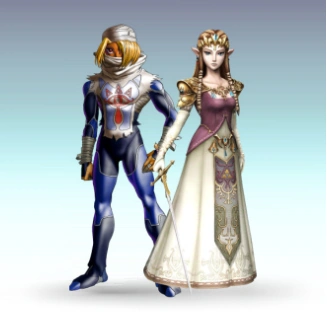
Zelda and her disguised persona, Sheik (Image Source)
Princess Zelda of The Legend of Zelda fame allows us to take an interesting look at this trope. Zelda herself, while not a "Ms. Male Character", does have some of the stereotypical female attributes. She has long hair, wears purple, and has a tiara. However, in one of the greatest games of all time, The Legend of Zelda: Ocarina of Time, she disguises herself as another character named Sheik, who displays none of the female stereotypes we're used to seeing in games and pop culture in general. It's important to look at female characters in gaming and understand where they come from. I believe more of an effort needs to be made in order to change the Ms. Male Character stereotype, but we seem to be well on our way, especially thanks to characters like Lara Croft in the Tomb Raider reboot.
Successful, violent video game franchises aren't generally known for their feminist leanings, and the Assassin's Creed titles are no exception, until now... maybe. This video reviews Ubisoft's newest installment, Assassin's Creed: Syndicate, released in October 2015, which features some distinct differences from its predecessors. Most notably, it has two protagonists, one of which is a woman. Twins Jacob and Evie Frye fight to free London's oppressed working class from the clutches of evil businessman and Templar (Assassin arch-nemesis group) leader, Crawford Starrick. The storyline is pretty standard for any Assassin's game, but includes far more female characters than ever before. Sarkeesian notes that the expansive franchise has received criticism in the past for its lack of playable ladies (save for a tie-in game released mainly on handheld platforms that followed a female pirate), and Syndicate seeks to remedy the situation.
The Frye twins are first presented together and it is made clear that they are equals, but as the game progresses, Jacob's plotline takes center stage. For side-quests players can choose to play as Evie or Jacob, but if they lean toward the latter, they only interact with Evie sometimes, though her story and character are far more compelling than her brother's. Many of Evie's quests see her cleaning up arrogant, brutish Jacob's messes. This is disappointing because a female character as well-realized as Evie is rare in the gaming world. She is never sexualized or objectified, is appropriately dressed for killing people and scaling buildings, and doesn't seem like a male character who was gender-swapped at the last second.
Other than Evie, there are several female characters within the world, from rival Blighter gang leaders to Queen Victoria. One of the Frye's close associates, Ned, is a trans man. The prostitutes seen on street corners, used as cover for male protagonists in previous games, are completely absent from Syndicate. While the game is wonderfully gender-inclusive, it fails miserably where race is concerned. Henry Green, and Indian assassin with whom Evie has a romantic subplot, is the only recurring character of color in the entire game.
Evie and a Templar leader, pre-battle
I really loved this video because it echoes all of the feelings I had while playing Syndicate, which I finished last week. It was an especially enjoyable video because all of my friends who play video games are guys who aren't particularly interested in hearing me dissect the game's gender politics, so it was nice to hear my own thoughts vocalized. I attended San Diego Comic-Con last summer and ended up at the Assassin's Creed panel, even though I'd never played a game from the franchise before. I left the panel SO excited to play Syndicate because I'd be able to play a super-violent video game as a girl!!!!
I've been a gamer since second grade and a feminist since I was born, so the lack of playable, or even humanized, female characters in the gaming world has never gone unnoticed by me. As I got older and became able to purchase rated-M games, I found that I liked my games as bloody as could be. This meant loving GTA V for car chases and shootouts, but not loving the first-person POV lap dances at strip clubs. Even playing Assassin's Creed II post-SDCC, I was disappointed to find literally one recurring female character... and she eventually seduced the protagonist.
When I played Syndicate, I played as Evie whenever possible. Because of this, I didn't really notice that Jacob's story took up so much more of the game than his sister's, but I definitely see it now. I did notice, to my delight, that there were women everywhere throughout this game's 19th-century London, and they were all treated like competent human beings! To my disappointment, I also quickly noticed how white the game was. But despite its shortcomings, Sarkeesian and I both agree that Syndicate is a big feminist step in the right direction.