Showing posts with label comics. Show all posts

Friday, February 21, 2020

Tropes vs Women


This series of six videos explain six common tropes regarding women. This series is aimed at Hollywood films, television series, video games, and comics though they are found elsewhere as well. The first trope is the Manic Pixie Dream Girl, a "bubbly shallow cinematic creature that exists solely in the fevered imaginations of sensitive writer-directors to teach brooding, soulful young men to embrace life and its infinite mysteries and adventures"-Nathan Rabi. The second is about Women in Refrigerators. This trope was coined by Gail Simon and features female superheroes who have been depowered, raped, or cut up and put in the refrigerator. Third is the Smurfette Principle. This is the tendency for works of fiction to have only 1 female amongst an ensemble of men, despite the fact that roughly half the human population is female. Next came the Evil Demon Seductress. This one is pretty self-explanatory, a female demon, vampire, alien, etc. uses her sexuality to seduce, manipulate, kill, and sometimes eat men by luring them into her evil web. The Fifth is the Mystical Pregnancy. This dates back to the bible. Characters are reduced to their biological functions. This is also called reproductive terrorism or torture porn. The last, and very destructive is Straw Feminist. This trope involves the distorted view of feminism, an exaggerated character is created and filled with misrepresentations, oversimplifications, and stereotypes to make it easy to discredit feminism.
Image result for avengers banner
I loved The Avengers, but think about how the women are portrayed.

For me, these videos were eye-opening. I can say I had noticed some of these things before but never knew they were used as often as they are. A common thread for most of them is the women are highly sexualized and objectified. The exception was the straw feminist, who is portrayed as more masculine and pushy, unattractive, often fanatical. The biggest danger of these is their overuse. They paint women in a bad light, they perpetuate stereotypes, and they encourage disrespect and mistrust of women. These attitudes and beliefs make it harder for women to achieve equality. They make us look like either dumb, shallow, helpless creatures, or evil and crazy. These messages are found everywhere on social media, in advertising, in literature. When I really started to think about it, the examples are staggering.

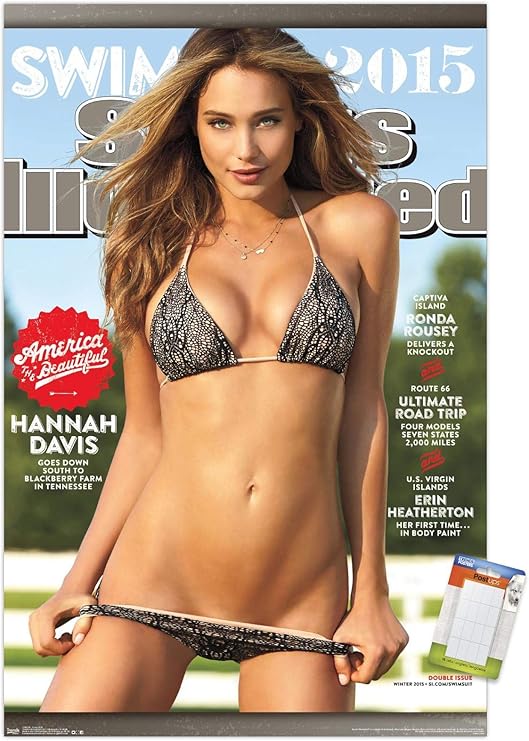
Image result for sports illustrated cover
No better example than the cover of a men's magazine.

The information in these videos ties in nicely with other materials we have explored. I feel these tropes also fit in with the video for this module on African American women and sexuality. I think they are portrayed often as part of the Evil Demon Seductress trope. While not always a demon or vampire, they are portrayed as using their sexuality in a manipulative way. This series also mentions the Bechdel Test as part of the Smurfette Syndrome trope. The concept of the Male Gaze is also prevalent in these tropes. Women are objectified, they are a muse, and if they resist and fight to be more, they are crazy.  

Image result for quotes about women

Saturday, April 6, 2019

Oogli Yawabooby Razzle Dazzle Root Beer: Racism in Howdy Doody


In the 1950 Howdy Doody comic No.6, one of the stories titled "Adventurers Club" from Dell Comics show friends Howdy Doody and Dilly Dally overhear an offer being made to whoever can produce the most unusual creature of the year, and decided to go on a voyage to the Golly-Wolly Islands to discover it. Unfortunately, the captain of the ship brings Howdy and Dilly to the wrong island, which is inhabited by cannibals.The issue (pun intended) with this comic is mostly the cultural priorities that are outlined in the Comic Code Authority of 1954 go into detail about what is unacceptable for the public to be reading, however, when addressing racism or things of the like, it is one vague blanket statement that reads “Ridicule or attack on any [...] racial group is never permissible.” But the content present in the Howdy Doody comic doesn’t necessarily identify a racial group, but creates one within the Howdy Doody universe which depicts islanders as more animalistic than human. Granted, the Comic Code Authority of 1954 was outlined four years after the publication of this Howdy Doody comic, but the real underlying issues are not fixed to the extent that other issues, like keeping the sanctity of marriage or prohibiting the use of the words “Horror,” “Crime,” and “Terror.”
The comic does not explicitly identify the ethnicity and/or race of the islanders of “Golly-Wolly Island” but seem to still perpetuate gross stereotypes of non-western island peoples. There are plenty of examples of this shown within the comic. First, we can see a form of black-face in how the islanders are stylistically drawn with overly wide and large lips. They seem to take up most of the islanders faces. This is similar to how black-face was used in Minstrel shows. The hair and costume of the islanders is primal, with the use of bones and various piercings as accessories. The islanders are also cannibals, as to add to the already animalistic characteristics they were given, they also seem to be not as smart as Howdy and Dilly, the main characters whose stupidity is the main focus of the comic series.
There is also a panel in which an islander, who we are meant to assume is some sort of shaman or spiritual figure within the population, wearing a ritual mask, chanting “Oogli Yawabooby… Razzle Dazzle Root Beer!” When asked what it was all about, a islander explains that he is asking the ancestors if they approve of Howdy and Dilly as a meal. This is an obvious play on non-western ritual practice, especially the importance on spiritual relationships with ancestors. From here, an actual gorilla appears, and, aside from the amount of body hair on the gorilla, there is very little difference in the way the islanders and the gorilla are depicted.
Popular culture has a role in perpetuating these stereotypes, especially in these comics. They seem light-hearted and for satire, but even comic books depicting dark-skinned, misshapen bodies in contrast with the white men and women depicted in
all of the comics create a harmful divide between “us” and “them.”


Saturday, April 14, 2018

Ripley's Believe it or Not!


Ripley’s Believe it or Not! Issue No.1 September, 1953


The first story is about a vision a ship captain had that ended up saving two ships from being shipwrecked. Then there are ‘unbelievable’ facts and optical illusions. The second story is about a boy who won a chess game and requested mercy instead of monetary gain, who turned out to be Thomas Paine. Then there is a spread about the mystery and wonder of Africa and different tribes. The third and final story is about a ship during the war that got bombed by their own bomb. 

In the spread “Africa Explored”, Ripley’s Believe it or Not! was respectful, for the most part in 1953, of their portrayal of Africans. They didn’t use blackface, to depict them and provided amazing examples of their different cultures. As opposed to how African Americans were portrayed as goofy and lacking actual culture. The Africans were shown as individuals within a community rather a laughingstock or influenced by white people. However, throughout the comic, there were no other depictions of Africans or African Americans at all. This was reminiscent of the notion that black people were not necessarily a relatable people that were to be included, rather only through study, should they be acknowledged. Given that the comic was published in the middle of the Civil Rights Movement, the race relations between African Americans and whites was tried anyway. But the comic reinforced the association of African Americans being from these foreign places and not actually a part of American society.  


Sunday, April 8, 2018

roy rogers and trigger comics #99

https://archive.org/details/RoyRogersAndTriggerComics99


In this comic we see deputies roy rogers and Pat Brady attempting to catch thieves who are stealing meat from local farmers. Roy Rogers and Pat get in to a shootout with the criminals and the criminals fell. After they use their dog to track the criminals down and end up apprehending them and bringing them to jail. To me this comic was most similar to our section on cowboys and westerns. Roy rogers and his partner are portrayed as two white men bringing justice to a town through any means necessary whether it is killing or arresting the criminals. It plays in to the idea of the cowboy and how they were seen as bringing justice to unlawful places, these two men apprehend the criminals and "save the day'  through their use of violence to catch and apprehend the criminals.

Module 11 - Comics blogs

Phantom Lady Feminist Viewpoint

The blogpost i will be writing about this week is about the "Phantom Lady" series, #23. Produced in April of 1949. The link will be provided at the end of the blog itself. In this comic, the senator is traveling to India. The people there worship tigers, that is all they know. The senator is mislead by a spy to lure him to a trap while they organize to steal oil from the "Tiger people". Unfortunately, the senator and his son both get caught and the phantom lady has to save the day. She eventually free's the two and goes back to the "Tiger People" and convince them to stop praying to the tigers and fight the invaders, which they do and repel the invaders. From a feminist viewpoint, i personally feel the fact that they have a heroin with her own comic during the time period a strong step forward as there aren't many female heroes period. Most often, female characters in comics are sidekicks or the wives or part of the "Ms. Pacman" culture. Where the females are essentially the female versions of the male super hero, such as Batman and Batgirl, or Superman and Supergirl. Unfortunately, the portrayal of the Phantom Lady could be better. She goes into battle with a skimpy top showing maximum cleavage and a super short skirt. This could be possible that this is apart of her super powers and that she can go into battle dressed in practically nothing and still come out unscathed. Another thing is the front page of the comic, which shows her bound against her will and once again, at maximum cleavage. This also shows the "male gaze" where a man would stare at a woman. This is important as many argue that it objectifies women. Andy from the conservationist mentions "The “male gaze” invokes the sexual politics of the gaze and suggests a sexualised way of looking that empowers men and objectifies women. In the male gaze, woman is visually positioned as an “object” of heterosexual male desire. Her feelings, thoughts and her own sexual drives are less important than her being “framed” by male desire."(Theconversation.com). This also shows the typical damsel in distress on how so many women are portrayed in every aspect of entertainment. Once again, attempting to make sales or better entertainment at the expense of womens' suffering.

CITES

Phantom Lady :23 1949 = http://digitalcomicmuseum.com/index.php?dlid=12188

Loreck, Janice, and Andy Simmons. "Explainer: What Does the 'male Gaze' Mean, and What about a Female Gaze?" The Conversation. N.p., 05 Jan. 2016. Web. 08 Apr. 2018.
http://theconversation.com/explainer-what-does-the-male-gaze-mean-and-what-about-a-female-gaze-52486

Sunday, January 22, 2017

I Am A Cosplayer and I'm Not Sorry

Firstly, I apologize if this comes out in a terrible format because I have never really "blogged" before, so I hope the technical aspects take care of themselves.

As per the title of this post, I can confirm that the area of pop culture that interests me the most is Cosplay. For those who have never heard this term before, it is the combined concept of "costume" and "roleplay," meaning that you not only dress as a character that you like, but you act like them, and while dressed you do your best to fully become them. Now, there are definitely many different levels to this act, as any beginner or casual fan could tell you but that shall remain a topic for another time. I will simply state that I would consider myself at the upper echelon of cosplay, in that I try to make my costume as accurate as I can and do try to speak or act as that character would most of the time.

Myself as Maya the Siren from the "Borderlands" video game series at Boston Comic Con 2015.

Cosplay is important to me for more intrinsic reasons than I could probably count, but the most major reason is that it is very social by nature, there are thousands and millions of others who like to wear costumes to conventions and I just plain love making friends! Secondly, it speaks volumes to my artistic nature; not everyone endeavors or is capable of making their own costumes, but it is an artistic challenge that I thoroughly enjoy testing myself on.

Myself, my husband Nick, and friend Sammy as characters from "Metro 2033" and "Fallout" at PAX East 2016.


As to what I expect to learn - conversely I intend to include the things I know in order to contribute to the amazing discussions we are about to share and I expect to learn more about the things I have likely been avoiding. For instance, I have never been particularly fond of zombies. The original idea of roaming deceased humans is wildly entertaining, but I feel it has become very overrated. The market has been completely saturated with zombie-themed things and frankly, I quickly tired of it. However, I promise to give it another chance as perhaps one of my classmates enjoys that part of pop culture and would be willing to elaborate in order to convert me :)

Myself at Boston Comic Con as Ezio from the "Assassin's Creed" video game series at Boston Comic Con 2015.

Monday, April 18, 2016

Module 13 Example: Measuring Up with Comic Capital

PROMPT


For this week, you will perform a mini-article analysis on a fandom that you participate in (that is, something you are a fan of: a sport, a TV show, an activity, a hobby, a music genre, etc).     Articles must meet the following criteria:
  1. A minimum of 12 pages of text
  2. Published in an ACADEMIC journal.
  3. Published after 1970.
  4. An actual article (not a book review or editorial).
For your post, you will include

  1. A full MLA citation at the start of the post.
  2. A discussion of what the article is about and what it is arguing (1 paragraph).
  3. A discussion of your critical thoughts on the article (1 paragraph).
  4. A discussion of how the article has enhanced your understanding of the particular fandom that you explored (1 paragraph).

Relevant Labels/Tags:  Fans, fandom, mass audience, fan community, journal article, [name of said fandom]


EXAMPLE
Brown, Jeffrey A. "Comic book fandom and cultural capital." The Journal of Popular Culture 30.4 (1997): 13-31.

Brown uses the concept of cultural captial in connection to comic fandoms.  The term, cultural capital, is derived from Pierre Bourdieu that relates to the various capital that one accumulates within his or her life that is not of a fiscal nature.  For instance, education and knowledge range, position within culture, understanding of and relation to cultural practices, etc.  He explores how meaning is made among comic fans as it relates to their knowledge of the industry and the value generated in that knowledge and how it relates to collecting comics.  Additionally, he explores the different places where cultural capital is exchanged such as in comic book stores, magazines, conventions, etc.  
Action Comics No. 1 - The First Appearance of Superman

He explores how all of this interacting and exchange influences the comic book industry in terms of the most popular titles and also the price of the most prestigious comics (e.g. Action Comics #1, Detective Comics #27; first appearance of Superman and Batman respectively).  Brown then devles into the history of comics fandom and recognizes that historically, there was very little cultural capital be attained from comics since it was seen a culturally-depriving rather than enhanced (such as the 1940s-1960s and especially after Frederic Wertham's influence on the industry).  

Brown notes that the rise of the counter-culture brought with it the return of some cultural capital to comics.  He also considers how comic fandom is affiliated with mass culture, where the accumulation of many comics is more significant than cultivating just a few elite selections.  He also illustrates that despite cultural critics who say popular culture has no canon, comics indeed has a canon of famous and important works and creators.  

This establishment by fans of a canon has also influenced how the comic publishing industry represents itself and publishes works.  Ultimately, Brown presents an interesting intersection wherein comic fans achieve their status by being so deeply vested in comics, something that is considered non-elite, and yet in doing so, mimic aspects of cultural elitism that is a cornerstone of cultural capitalism.  


I rather like this article in that it helps to explain how deeply vested we are as individuals in our fandoms and some of the reasons we get deeply invested in our fandoms (notice the economic terminology!). In particular, I think this article shows the ways in which fans negotiate meaning and value in their fan cultures and that process has an impact on the content producers.


Monday, April 11, 2016

Crime Must Pay the Penalty! Issue #41 (November 1954) 

In Crime Must Pay The Penalty Issue #41 the criminals are always caught and punished for their crimes. In the first story a safe-cracker is released from jail and declares that he is going to go straight. But his buddies have another plan, they force him to betray his new employer, a legitimate safe cracking company, and rob the customers. But the now good safe cracker manages to foil his old criminal gang's plans and in the end is rewarded for his bravery and trustworthiness. In the second story a criminal gets surgery to change his appearance and avoid deportation. He has his cousin, who is his spitting image, deported in his stead but when his cousin brags about being a past crime boss he has him killed. Of course the crime boss's plans are foiled and he is caught by the cops, as are all the other criminals in every story, because like the title says, Crime Must Pay the Penalty!

This is a good example of Hegemony, in which the idea that "Crime Must Pay" is represented in each of the stories. This theme reoccurs through every plot line reiterating the concept that being a criminal may seem like an easy way to gain fortune, but that in the end you are either going to end up dead or caught. Most of the criminals, even though they wear suits and drive fancy cars, seem to be from a poor background, they talk with slang and act all macho and some times are immigrants, like the criminal from the second story who was going to be deported. Never are the bad guys corporate criminals who schemed their way up the ladder, instead they are blue collar, hard and dirty felons who rob banks and wave around guns. This gives off the idea that the people who break the law are often of the lower classes, that crime and jail are meant for those poor offenders who are lazy and moral scum, rather than white collar up standing citizens.

Sunday, April 10, 2016

Cave Girl

For Module 11, I went to The Digital Comic Museum and read the comic  "Cave Girl" Issue #12. In this issue, Cave Girl, an archaeologist, had her work disrupted when a group of skull heads attack her and fellow archaeologist, Luke. Using clubs and rocks Cave Girl defeats the group of skull heads, leading a female to save the campsite.

Though it is refreshing to see a female singlehandedly take the lead, the comic reverts back to sexism almost immediately. By first look, this "hero" is seen in a short zebra dress, and of course as very large "curves", along with a huge pink flower in her hair - to further emphasize it is a female lead. But the sexism doesn't stop with just the looks.  On the first page, Cave Girl is seen thanking her partner, Luke, and attributing her knowledge to him, as if she could not complete her job without him. In fact, it wasn't until Luke was hurt that Cave Girl got the "strength" to save the day, and there was disbelief in the village after she took down a group of skull heads to save the day.

Even in a comic where a female is the lead there is the connotation that a girl must rely on the man for her brains, and must be in love with her male partner. And aside from the looks and love, there is also lust being shoved down the readers throat. Cave Girl's sexuality is seen from the beginning, all the way to the end, which forces us to believe the writer is using her as a sexual object, rather than believing a strong women can save the day.

Thursday, April 7, 2016

Glamorous Romances

For this blog post I entered The Internet Archive Comics Collection to broaden my horizons and dive into some comics. I’ve never really been a Comic kind of girl but after looking through a lot of comics they’re actually very entertaining. Being a woman who loves the thought of romance, I found a comic titled Honeymoon For One located in the Glamorous Romances comic book in the December issue. The comic focuses on a couple by the names of Rita Burton and Julian Doyle. The couple met at the Museum of science where they fell madly in love. They plan on getting married and having a honeymoon in Tahiti (the museum is doing a exhibition on Tahiti and Julian needs to go collect materials there) all is good until Rita catches Julian kissing another women, his Ex Fiancé. Julian resigns and leaves with his former fiancé. Rita still plans on going to Tahiti and her boss assigns an assistant to go with her named Gibbs Smith. Rita and Gibbs get swept up in the romance of the island and end up falling in love in Tahiti. Not shortly after but who appears, Julian, confessing that he still loved Rita and their love becomes one big triangle between Gibbs, Rita, and Julian. In the end Rita goes with her heart and actually decides to marry Gibbs and they live happily ever after. I believe we can look at this comic through a feminist theoretical lens. Honeymoon For One shows feminism in a positive light. When Julian resigned from the Museum and ran off with his ex Fiancé, instead of giving it to another leading male, they gave Rita the responsibility to go to Tahiti herself and finish the exhibit. Women fight for equality between men and women, especially in the workforce.

To Read Honeymoon For One click below:
https://archive.org/details/glamorous-romances-072

Monday, April 4, 2016

Module 11 Example: Reading Comics

PROMPT

For this post, students should visit either the Digital Comic Museum or The Internet Archive Comics Collection and read a US-based comic (these archives have manga and other non-US comics; these are not acceptable contributions for this assignment).  After reading the comic, provide an analysis of the comic using one or more of the theoretical lenses that have been presented to you in the course lectures such as feminism, race & ethnicity studies, the Frankfurt School (also known as critical inquiry; also, don't forget Part 2 & Part 3), symbolism, post-modernism, and hegemony.

Your post should include the following:

  1. A clear identification of the comic book that you read that includes the title, issue number, and direct link.
  2. Describe the content (1 paragraph).
  3. A brief discussion of a theoretical lens that you want to use  (1 paragraph).
  4. Applying the theoretical lens to the comic to explain what newer meaning is derived by using the lens on the comic  (1 paragraph).
Relevant Labels/Tags:  comics, [the name of your comic], [the name of the theory you are using]

EXAMPLE


Cover to the comic book: Crime Must Pay the Penalty 10 - October 1949

For this module, I will be tackling Crime Must Pay The Penalty Issue #10 from October, 1949.  The comic contains 4 comic stories (Revenge of the Cop Haters, The Genius and the Perfect Crime, Sinister Cab Combine, Pledged to Homocide), and one text story (Lineup Masquerade).  Revenge of the Cop Haters and Pledged to Homicide both entail prisoners who get out of prison and continue to commit crimes in attempt to get the aforementioned revenge or just to cause chaos.  The Genius and the Perfect Crime and Sinister Cab Combine, both deal with people who are aspiring improve their social standing (one to become part of elite culture and the other to court a woman) and commit criminal acts to achieve them.    Given the history of comics and the interest in crime comics (and eventually, horror comics) that we talk about in this module, I think discussing hegemony is probably a good topic to consider.  In hegemony, we see that there is a disruption of culture or an intrusion and that society tries to use compromises of sorts to limit actual substantive change.  Many of the comics read are often by youth, who feel disempower and crave a life not confined by rules and order.  Crime stories provide this opportunity to explore the uninhibited life.  Readers get to enjoy vicariously, the adventures and violence by the criminals represented in these tales.  However, the compromise comes with the fact that the stories often ended in their demise.  Thus, the cultural hegemonic powers provided the exploration of power in the face of authority but only tangentially and always with a message that this path ends in destruction of the individual instead of the overarching authority. 

Sunday, February 21, 2016

Spider-Man 2099: Combating Hispanic Stereotypes


The cover art for issue #1 of Spider-Man 2099 (Image Source)
Most of you probably don't know this Marvel character. Despite that, he's actually my favorite superhero of all time. Spider-Man 2099 (written by Peter David) launched in 1992 as a part of Marvel's 2099 Universe line of comics. This universe takes place in the year 2099, as you may have guessed, and included several futuristic versions of existing heroes and villains, such as Doom 2099, Punisher 2099, Hulk 2099, and one original hero (well, more of an anti-hero) named Ravage 2099.

Even though this is a future version of Spider-Man, this one isn't Peter Parker. I assume all of you know who Peter Parker is, because if you don't, I have to assume you've been living under a rock for the past 20 years. Spider-Man 2099 is actually a half Irish, half Hispanic man named Miguel O'Hara. Miguel worked as a scientist for a major corporation named Alchemax, which controls most of Nueva York (the 2099 version of New York). He's unhappy at the company and feels they are extremely corrupt. In an effort to stop him from leaving Alchemax, somebody from the company slips him a hallucinogen that bonds to your DNA. Trying to rid himself of the hallucinogen, Miguel attempts to perform a procedure that would revert his DNA back to it's original state. However, somebody tries to sabotage him, and ends up splicing his DNA with that of a spider, giving him even more spider-like powers than the original Spider-Man (he has organic webbing and talons on the end of his fingers).


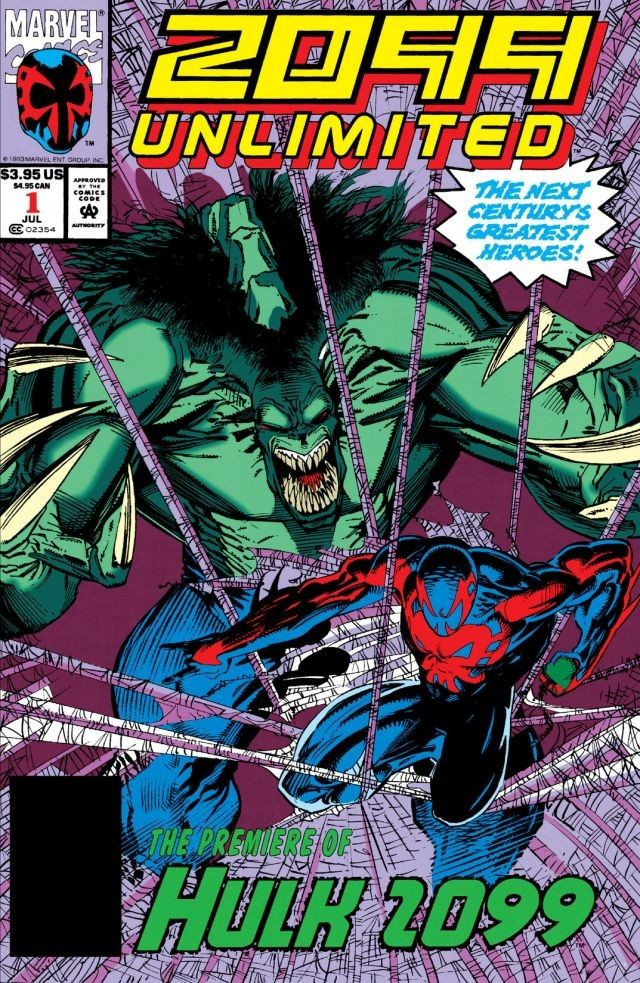
2099 Unlimited #1, featuring
Spider-Man 2099 and Hulk 2099
(Image Source)

What makes Miguel so unique is that he's not only the first Latino representation of Spider-Man, but he also avoids falling to the many stereotypes associated with Hispanics in popular culture. Miguel is a well spoken, intelligent man (as I mentioned before, he's a scientist). According to the Cobbina article, Hispanics were seen as crack users during the '80s. As such, Hispanics were often seen and portrayed as criminals within popular culture. O'Hara presents us with the exact opposite: a crime fighter. Considering this series was released in 1992, it was very close to the time where these Hispanic stereotypes were at their height. Spider-Man 2099 not only exists as just a futuristic version of Spider-Man, but also to help combat this stigma against Hispanics and how they are always portrayed as some sort of criminal or drug user.

The series was cancelled after 46 issues. However, Miguel was brought back in 2014 in Daniel Slott's Superior Spider-Man, due to demand for the character to return. This lead to Spider-Man 2099 getting his own brand new ongoing series, and he is now proving to be more popular and more relevant than ever before.

racism in popular comics

When we experience Pop Culture, we are essentially learning. When we view the hyper-sexualized "blaxpoitative" movie Shaft, or when previous generations experienced the vaudevillian shows that included blackface, the consumers of these artifacts "learned" the African American stereotypes that American policies perpetuated. When we examine Pop Culture, we are taking learning to a different level. It is at this level, when we make a conscious effort to disseminate what it is we are experiencing in Pop Culture, that we can act to disrupt those discourses which support the harmful stereotypes portrayed in Pop Culture/society.

Comics and cartoons have been, and are, a very popular and inexpensive form of Pop Culture Media that are consumed by a wide range of age groups.This means a large audience has access to the messages contained within the media. Comics truly took hold in the late 1930's when Action Comics #1 (1938) by Detective Comics (DC) debuted Superman. Their popularity quite obviously continues today, as seen in the current plethora of Superhero movies based upon popular comic book characters, and so warrant a closer look for racist characters and story-lines. Rather than examine one specific  Indigenous character in popular comics, I am choosing to showcase several from the last century that we may not have previously thought of as stereotypical representations.

An early example of embedded stereotypes is found in the Bugs Bunny Merrie Melodies cartoon Hiawatha's Rabbit Hunt (1941) written by Michael Maltese and drawn by Gil Turner. It is a parody of the classic American epic poem The Song of Hiawatha by Henry Wadsworth Longfellow (1807-1892) that romanticised traditional Ojibwe lifestyles. Hiawatha, first published in November of 1855, was a very popular and much read, lampooned, quoted, and parodied poem of its day (Moyne, E.J. 1957, p.93). However, Longfellow naively misrepresented Ojibwe culture, and appropriated elements of Iroquois culture (these two nations are incredibly dissimilar)*. Almost a century later, Warner Brothers, re-inscribed, for their own purposes, this stereotypical American classic, and in so doing created another popular version, for an entirely new audience, that continued to perpetuate these same harmful discourses.


Both Longfellow and Warner Brothers, penned examples of Pop Culture that "othered"** all First Nations communities and peoples by applying two dimensional tropes for the purpose of propelling a story forward. Here in Hiawatha's Rabbit Hunt,  Hiawatha is depicted as the "dumb Indian"; an incompetent, bumbling, stuttering fool, outwitted by Bugs Bunny (and anyone familiar with Merrie Melodies will recognize Hiawatha is a riff off the often outwitted Elmer Fudd). It is however this lasting misrepresentation, using an ethnicity other than the writer's own, or other than the intended audience, that perpetuates the harmful stereotypes that continue today.

A popular comic of the same era, that took a stab at portraying Indigenous lifestyles was The Adventures of TinTin: TinTin in America,  created by Hergé aka George Remi. As an adventurer, TinTin was featured in many different locales; and the plots Hergé wrote for his eponymous series followed similar action/adventure story-lines we still see in today's action films. However, Hergé never traveled to North America and therefore could only rely upon the stereotypical portrayals as seen in the Pop Culture of his era to inform his story. These details are obvious when we look at a page from this edition.
The Adventures of TinTin:TinTin Goes to America, page 19

In this page, we see the Indigenous characters referred to as "redskins". The individual who represents the Chief, as indicated by the ceremonial regalia--the "Headdress" which is reserved for important ceremonial occasions only--is easily duped by the white man. Additionally, the Indigenous characters all speak in a stereotypical broken English, replicating the style used by the famous Indigenous sidekick Tonto in the popular Lone Ranger series. Other images we commonly think of when the symbol "Native Americans"/"Indians"/"Native Indians" is used, are also found on this page: the wigwam/tee-pee, tomahawks, and the peace-pipe are all present. This leaves no doubt as to who TinTin will be threatened by in this adventure story. The very fact that Hergé used the stereotypical "threat" of Indians who are themselves represented in a dated*** scenario that depicts violence and deficiency as they prepare to ambush/threaten a white character, is another example of the white privileged once again trying to control or misrepresent the Indigenous identity, this time through fear.

One of the most common ways two dimensional Indigenous characters are used in comics is the subordinate and "trustworthy sidekick", the most popular being the aforementioned Tonto of the Lone Ranger. It is however important to note the comic Turok: Son of Stone. Turok first appeared in Four Color Comics (1954), published by Gold Key, in issue no. 596 (Sheyahshe, 2008, p.48), written by Gaylord Dubois and illustrated by Rex Maxon (of Tarzan of the Apes fame). In Turok we have the lead character, who is himself Indigenous, worthy of having a sidekick of his own rather than say a spirit animal as his guide.
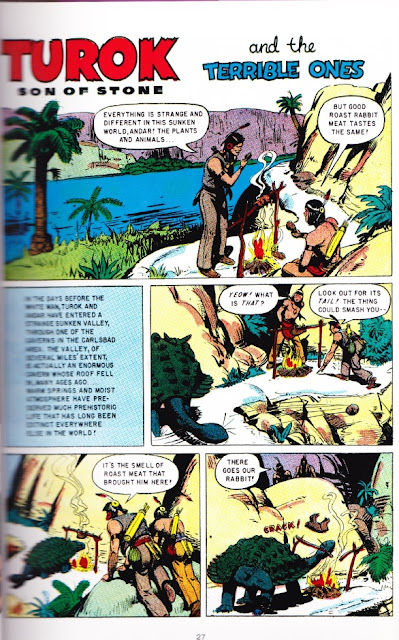
Torok:Son of Stone, Issue 2, Page 1, shown from Turok :Son of Stone Vol 1, Dark Horse Archives, 2009
Although this 1950's comic by Dubois features American Natives as the leading characters, the story lines parallel many of the colonizing acts perpetrated on the indigenous people the Europeans found when the "New World" was discovered. Under the guise of assisting the tribes they encounter, Turok repeatedly refers to the prehistorics as "savages" and "backward". In one issue we see Turok and Andar in the role of leaders in a foreign land, relocating a tribe to a "preferable location", only to have that tribe again threatened. Throughout the entire collection Turok and Andar are gratuitously killing beasts for meat and yet purposely laying much of the kill for waste, something no warrior of the Plains would have deliberately done.

Another theme throughout was the use of their poison tipped arrows, again altering the lifestyle of the "indigenous" cavemen. Turok and Andar establish their position of power through the judicious dispersal of the weapon without divulging their secret for making the poison, much akin to the Europeans restricting the use of guns for political gain. It is at this point Dubois engages the popular "sneaky/deceitful indian" trope in the guise of the wise medicine man in an attempt to steal Turok's power. But of course our eponymous hero outsmarts the inferior medicineman.

These trends continue today. As recent as 2007, Vertigo Comics began publishing a 60 episode series entitled Scalped, written by Jason Aaron and drawn by R.M. Guera. In this very popular, well acclaimed, hyper violent series--which does feel as though it was well researched--we see the hero, Dash, as an undercover agent who is himself Lakota infiltrating the Lakota Reservation in order to nail the corrupt Chief.
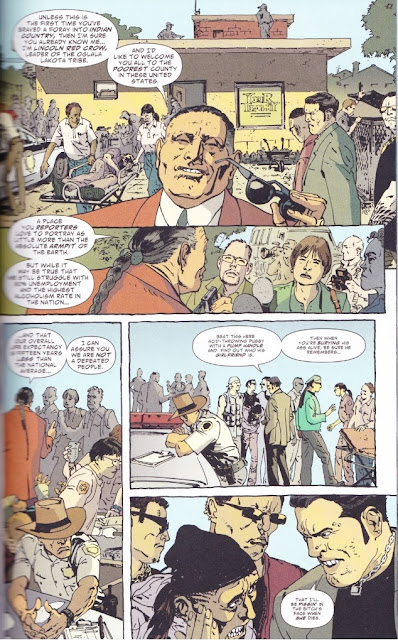
(Scalped, Issue 2, June 2007, Page 7)
The storylines in this monthly serial include drug deals, alcohol problems, casinos, murder, and corruption. Without question, such problems are not altogether uncommon on Reserves/Reservations, but this series reads like a very bad homage to Tarantino's storytelling skills; it feels like the story was written to fit around a hodge-podge of tropes and cliches. Aaron chooses to sensationalize the stereotypes with two dimensional tropes rather than tell a story using three dimensional characters and as a result this example of pop culture media once again perpetuates the stereotypes.

With the popularity of comics continuing to grow as seen with the increase in popularity of cosplay, cons, and the ever growing monthly Previews World catalog, it is not reasonable to assume that these stereotypes will simply fade away. However, we can take an active role as we read these series and recognize the underlying messages that are contained. Simply being aware that these images are present, recognizing their effect on popular opinion, means that we are disrupting the discussions that are a part of this form of Pop Culture.


*Hiawatha, as the oral story-telling of the Mohawks tell us, was the spokesman for The Peacemaker who ultimately negotiated peace between the warring original five Haudenosawnee Nations: Senecas, Onondagas, Mohawks, Oneidas, and  Cayugas (Robertson, 2015). The wampum that acts as a contract for this ongoing peace is named the Hiawatha Belt.
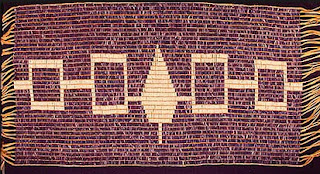
https://studypopculture.blogspot.com/b/post-preview?token=O9u0AlMBAAA._-MOSsSXihQHKdvr1xylJ22OPEcRDBqwoRJpXMLLcjEhRrBDvcBQJ-sZg4P4_oLuolQuyuxVIcpP9iC_8_k9QQ.NqLjNG3dD1yEE_nOzGGXkw&postId=1892657275898099577&type=POST


** Other, is a term made popular by Edward Said in his book Orientalism. This term refers to someone other than the self being different, but is applied instead to disenfranchise segments of society based upon cultural and ethnic dissimilarities that are viewed as bothersome by the privileged hegemony. 
*** The TinTin adventures were written in the 1930's and 1940's. The stories were all present to the time adventures, however in this TinTin adventure (written in 1945),  the Indigenous characters are all portrayed in a style reminiscent of the 1870's.

Works Cited: 

Moyne, E.J. (1957) Parodies of Longfellow's Song of Hiawatha, Retrieved from: http://udspace.udel.edu/bitstream/handle/19716/4663/article5.pdf?sequence=1

Sheyahshe, Michael, A. Native Americans in Comic Books: A Critical Study. USA: McFarlane
            and Company. 2008. Print.